DVD-quality lessons (including tabs/sheet music) available for immediate viewing on any device.
Take your playing to the next level with the help of a local or online banjo teacher.
Weekly newsletter includes free lessons, favorite member content, banjo news and more.
Premier Sponsors





|
Please note this is an archived topic, so it is locked and unable to be replied to. You may, however, start a new topic and refer to this topic with a link: http://www.banjohangout.org/archive/354889
Jonnycake White - Posted - 06/22/2019: 11:39:42
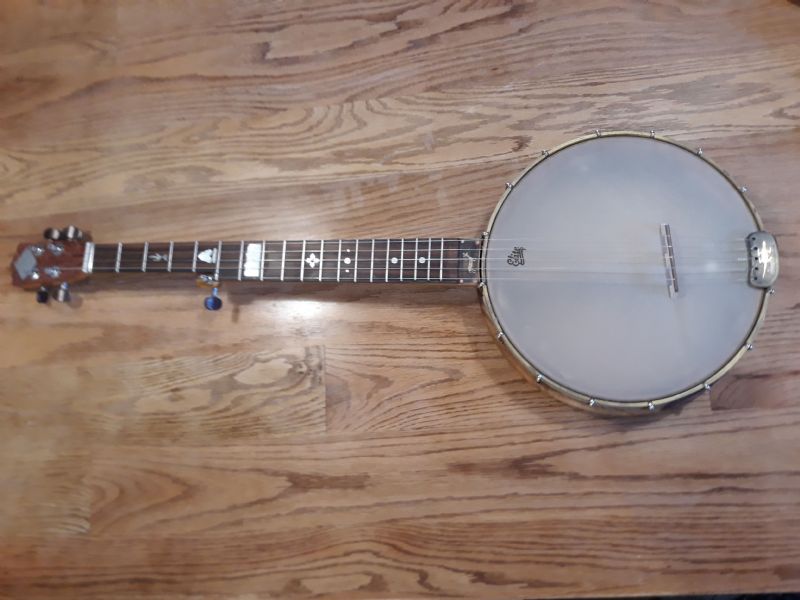
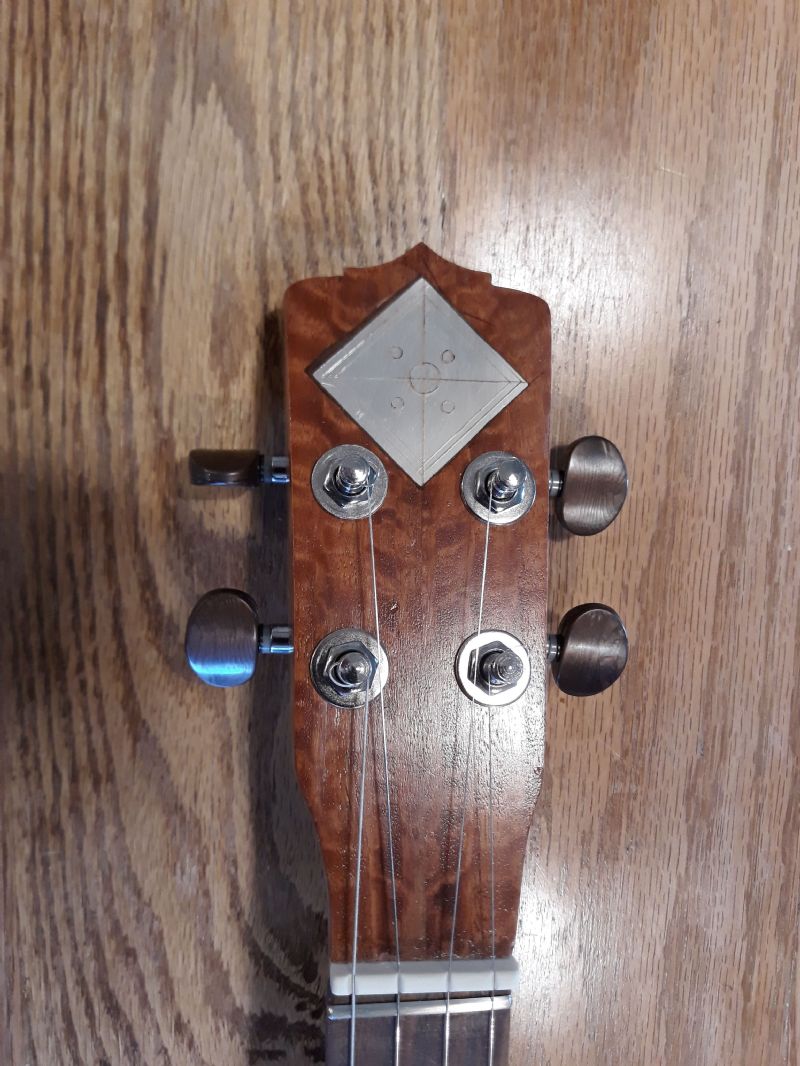
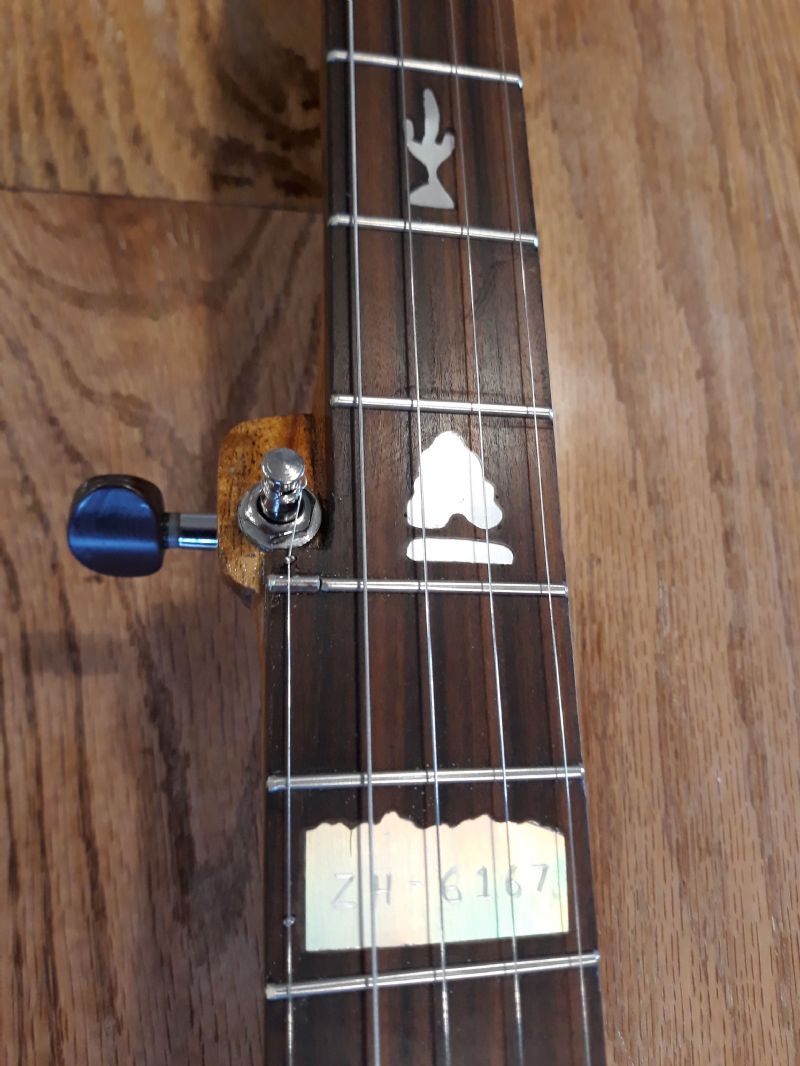
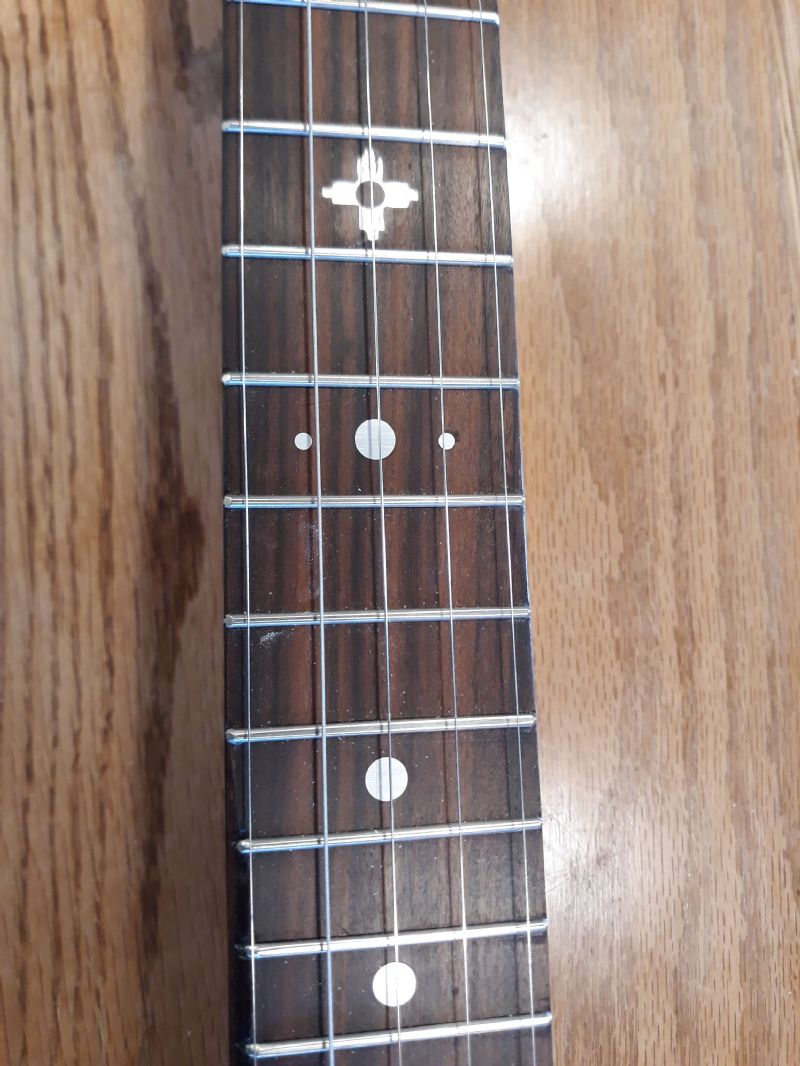
I spent my childhood in the four corners states: Arizona, Utah, Colorado, and New Mexico (in that order). I thought I'd build a banjo, first as a prototype to try out some new techniques, and second, as a piece of personal history for myself. I don't know if anyone else would appreciate it quite the same, but I think people from the southwest would recognize some of the images.
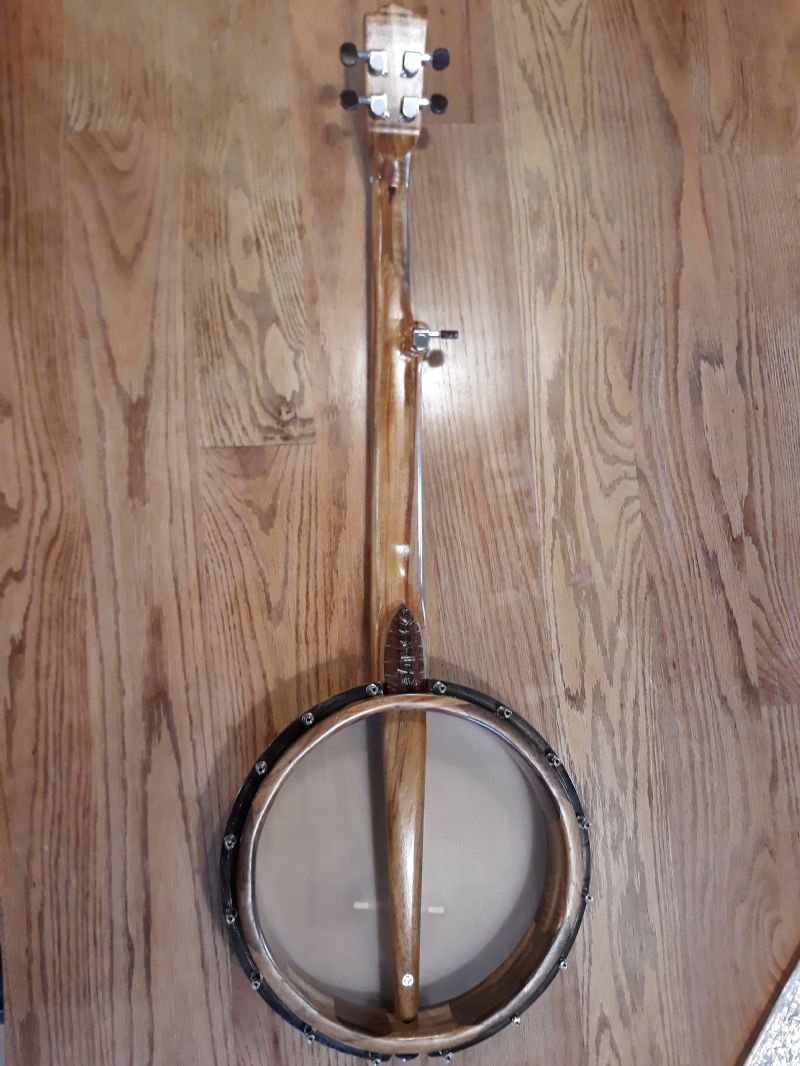
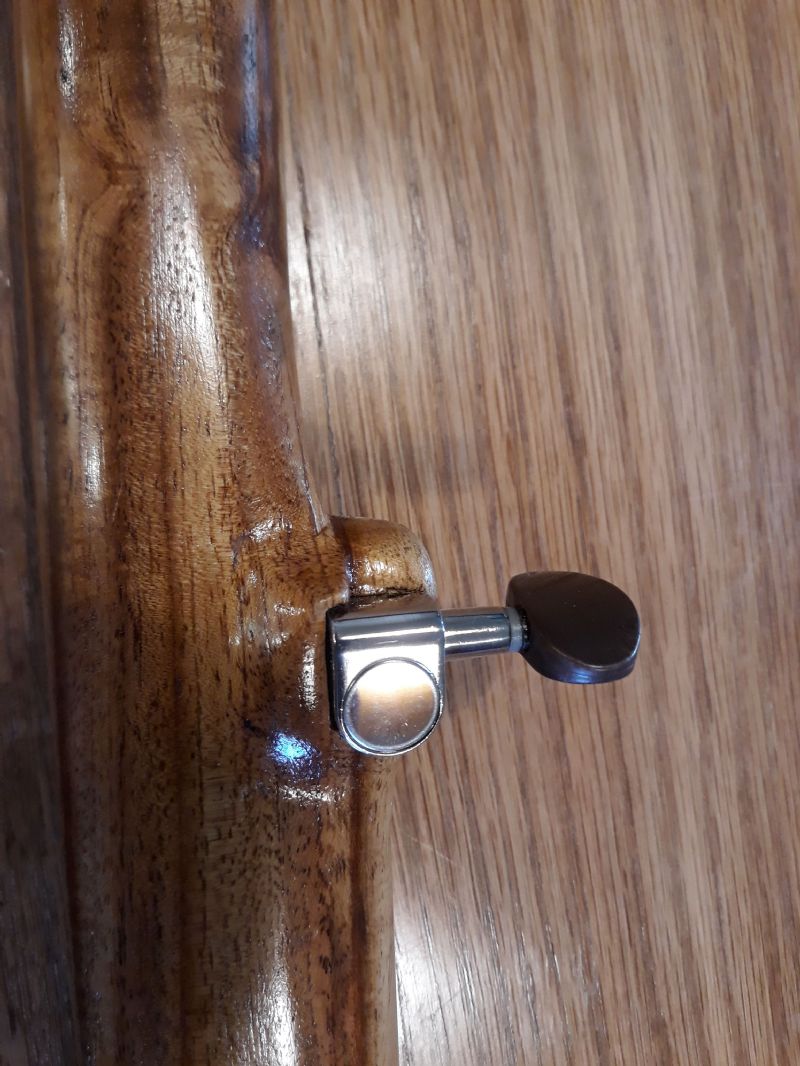
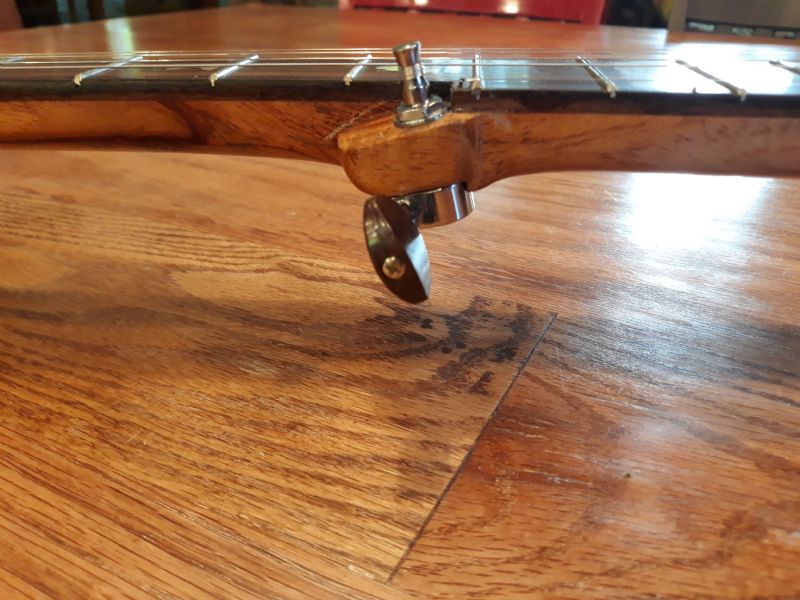
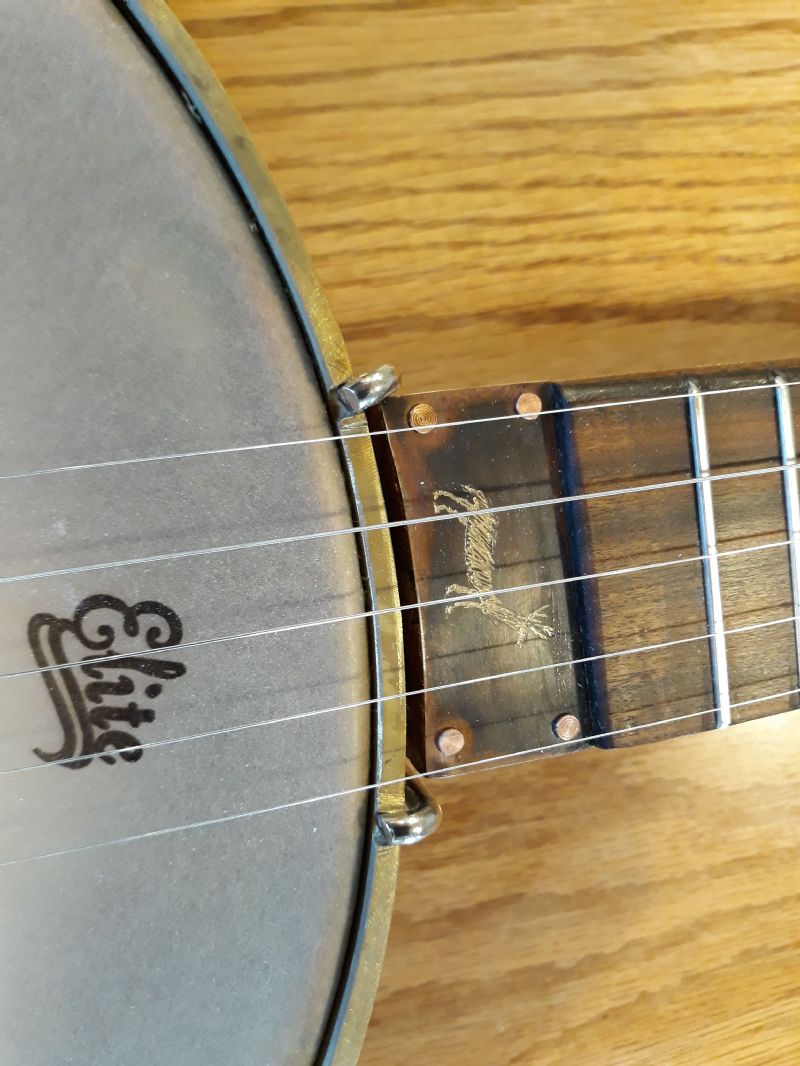
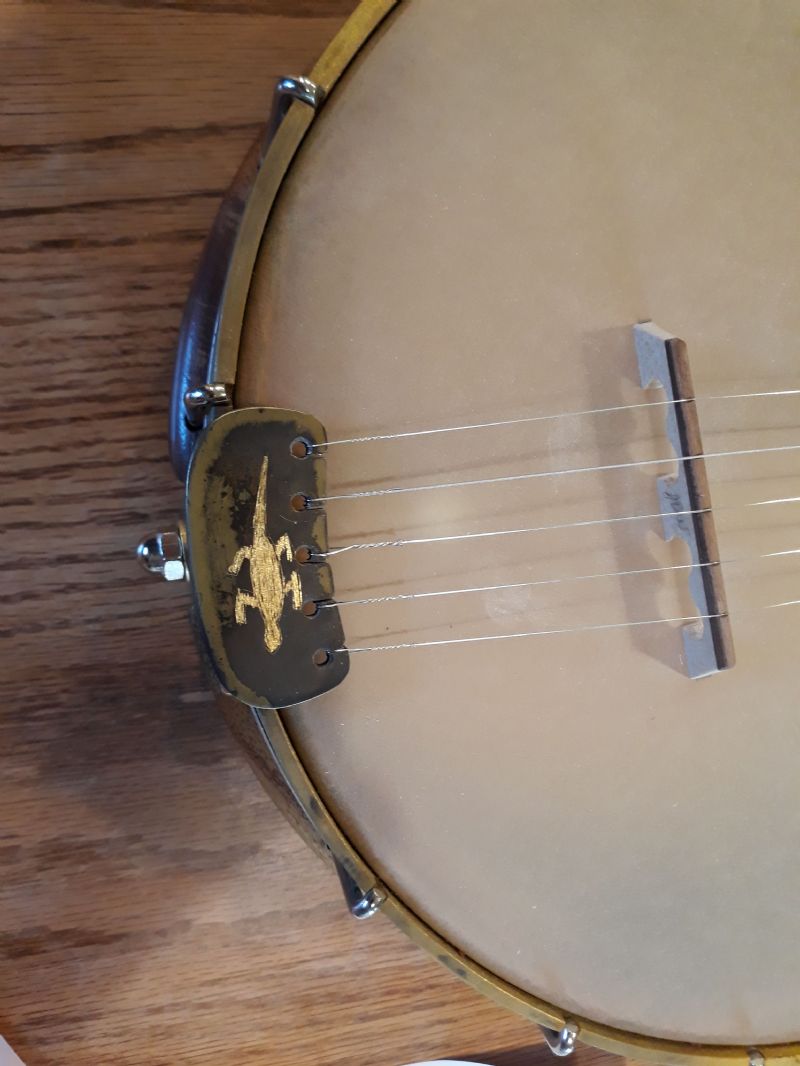
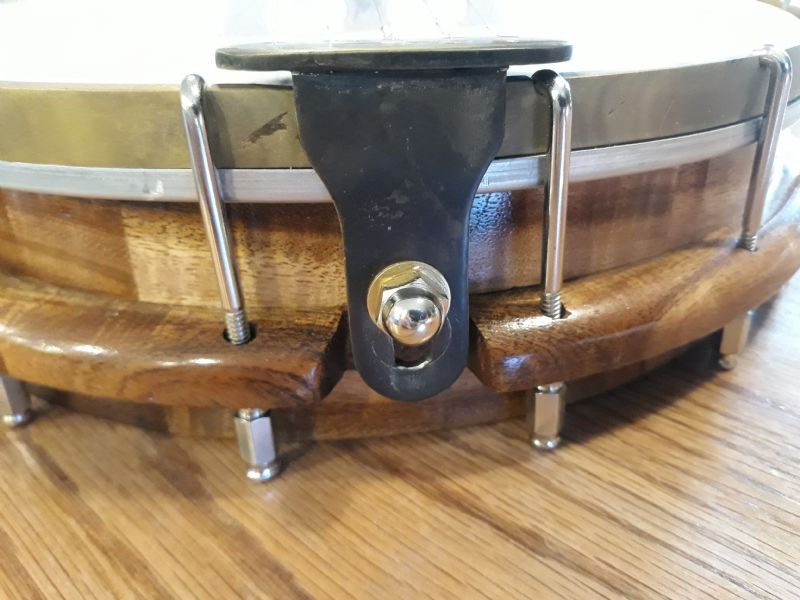
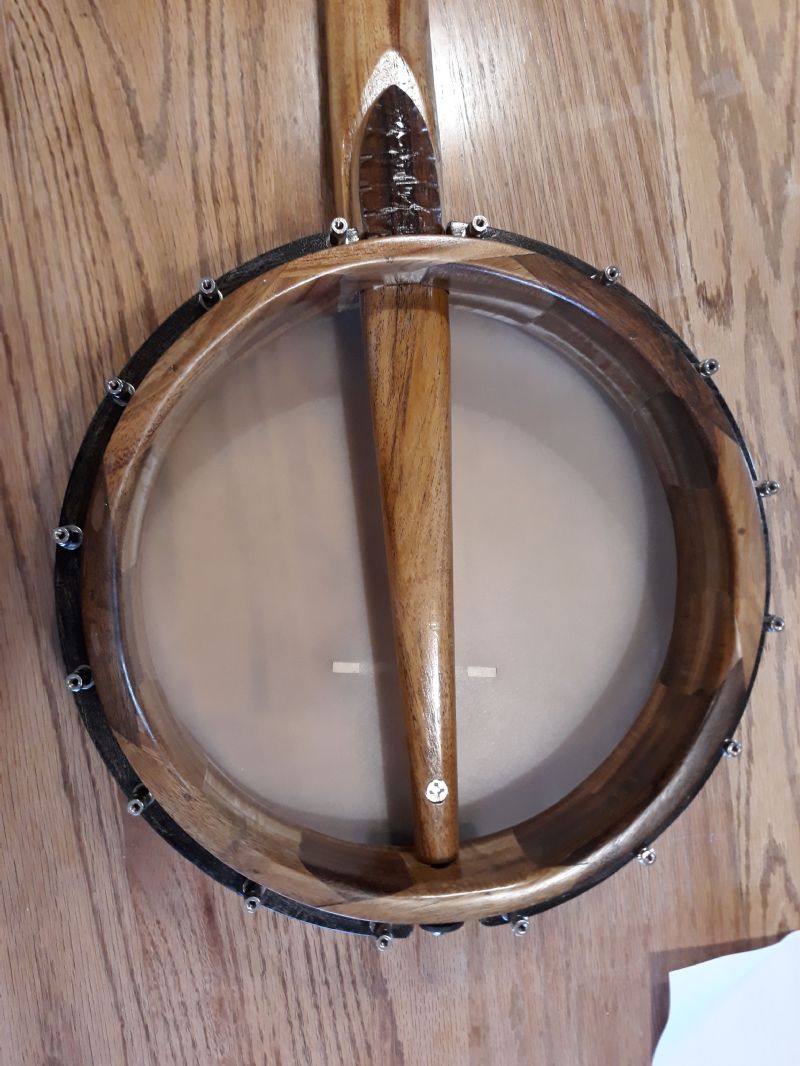
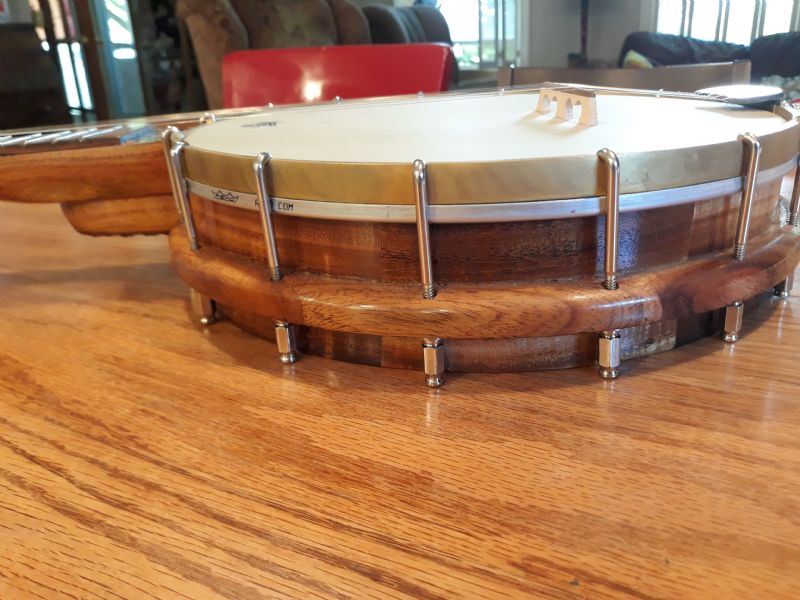
New things I tried out: 1) a Helix rim (my first) which also incorporates a wood flange for the tension hooks, and a jatoba cap/tone ring. I am so far very satisfied with the volume and tone I get from this rim. I will take it to a jam asap and see how it does. 2) a newish arrangement to use a sealed right angle tuner on the fifth string, while leaving enough clearance to play comfortably with a capo at the 2nd fret. 3) attempt to use heat and mineral oil to patinate the brass parts. Excellent results on the neck plate, fair on the tailpiece, failure on the tension ring. The variables were the mass of the brass pieces and the specific alloy, with the smaller pieces doing better and the neck plate alloy, unfortunately unknown to me, doing better than the high lead content 360 alloy used for the tailpiece and tension ring. 4) the use of sissoo rosewood. This is a member of the dalbergia genus, but is somewhat lighter and more variegated in grain than the latifolia and nigra species that are well known tonewoods. It is also not oily. I did use some of the more familiar rosewood for the fretboard and heel cap.
Dan Drabek - Posted - 06/22/2019: 14:50:16
Looks great Jon. It has character and plenty of original touches that bring it out of the ordinary. Kudos for designing and constructing an original tailpiece.
DD
John Gribble - Posted - 06/22/2019: 18:31:30
Sounds like a banjo to me!  A good one!
A lot of interesting idea in it. Is that a compensated zero fret?
Jonnycake White - Posted - 06/22/2019: 19:13:11
quote:
Originally posted by John GribbleSounds like a banjo to me!
A lot of interesting idea in it. Is that a compensated zero fret?
No, it's just straight across. Must be the camera angle that makes it look slanted. I did use high crown fret wire at the zero fret, and also the fifth fret where the fifth strings bears, to raise it up enough to prevent buzz. I had to file it down a bit to get good action and intonation at the first fret.
Thanks for the compliments!
Edited by - Jonnycake White on 06/22/2019 19:14:02
Parker135 - Posted - 06/23/2019: 04:35:07
Nice! I really like the imagery. What sort of neck joint did you use? Is that a largish dowel stick, a Rudy rod, or a complete pass-through of the neck?
rudy - Posted - 06/23/2019: 05:17:57
Very nice, Jon! I love your personal touches you put into each new banjo.
If the fifth string post gets in your way you can cut it off just above the bottom of the curved portion, slightly round the top, and drill a new hole for the string just below your cut. There's still plenty of string post left to wind your string downward. I've done that on a few Ashborne-style necks I've made and it worked out nicely.
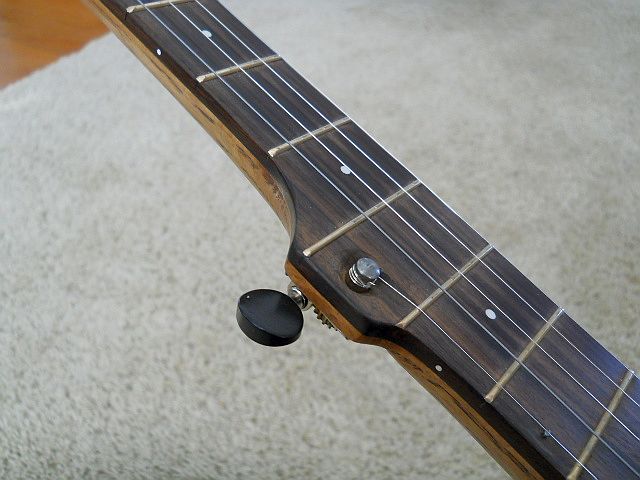
Your angled tuner mount is unique and innovative!
Edited by - rudy on 06/23/2019 05:21:47
R Buck - Posted - 06/23/2019: 05:36:21
It is a fine looking banjo. That 5th string tuner wold be difficult to maneuver around until one gets used to it or at least for me it would be. I like the combination of primitive and sophisticated features. You get around the lower tuning ratios with guitar tuners. Lots of interesting ideas.
Jonnycake White - Posted - 06/23/2019: 19:41:12
quote:
Originally posted by Parker135Nice! I really like the imagery. What sort of neck joint did you use? Is that a largish dowel stick, a Rudy rod, or a complete pass-through of the neck?
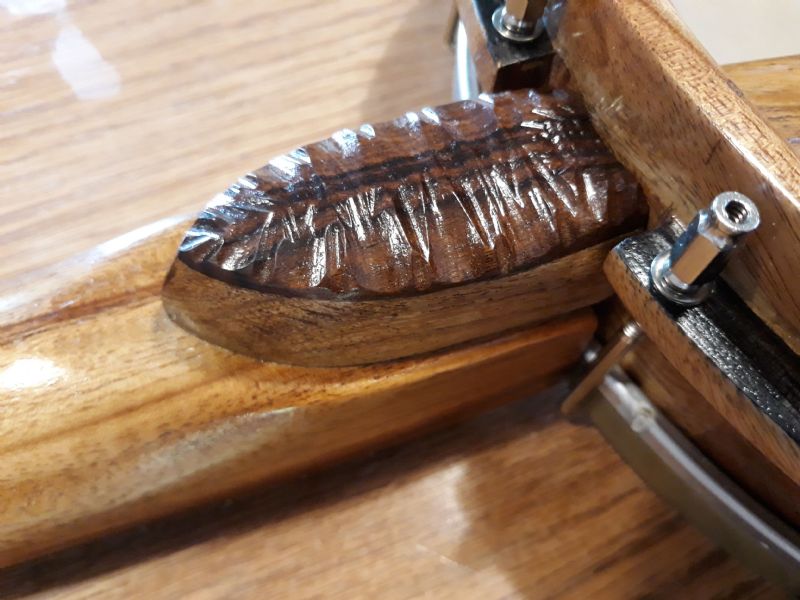
The neck and neck extension are basically what Rudy calls a "backstep neck" where the neck extension is glued (and screwed, in my method) to the bottom of the neck blank, and pass through a largish hole in the pot. I also add a heel cap to the assembly. Sometimes I do the neck extension full width in the heel portion and narrow it down abruptly where it meets the pot, but in this case I made it narrow all the way. As I profiled the heel area of the extension before gluing it onto the neck, the shape reminded me of a Clovis projectile point, so that is what the heel cap represents.
Jonnycake White - Posted - 06/23/2019: 19:44:30
quote:
Originally posted by rudyVery nice, Jon! I love your personal touches you put into each new banjo.
If the fifth string post gets in your way you can cut it off just above the bottom of the curved portion, slightly round the top, and drill a new hole for the string just below your cut. There's still plenty of string post left to wind your string downward. I've done that on a few Ashborne-style necks I've made and it worked out nicely.
I usually do just that (thanks for the idea), but in this case I hesitated due to the impossibility (?) of removing the string post from a sealed tuner. I like to chuck it in a drill press to even out and round over the top of the post after I cut it. I've also had problems drilling such a small hole in high quality string posts - the metal is much harder than some.
Jonnycake White - Posted - 06/23/2019: 19:53:56
quote:
Originally posted by R BuckIt is a fine looking banjo. That 5th string tuner wold be difficult to maneuver around until one gets used to it or at least for me it would be. I like the combination of primitive and sophisticated features. You get around the lower tuning ratios with guitar tuners. Lots of interesting ideas.
I have done several similar 5th string tuner arrangements and for this one I tried quite hard to minimize the intrusiveness of the bump-out. It's a trade off, like most things in life. The least intrusive is a tunneled string to the peg head, such as Rudy, the Nechville company, and others prefer, but I'm a bit too much of a traditionalist for that. Besides, dealing with the traditional tuner in the side of the neck builds character! The next least intrusive is a geared 5th string tuner, either right-angle or planetary, but I can buy a set of six good quality tuners for not much more than one of those (and I am a notorious cheapskate, just ask my wife). So this is the best compromise I've come up with so far.
SWT60 - Posted - 06/24/2019: 05:32:38
Unique and beautiful! And I guess I need to learn Colored Aristocracy better. Sounds great.
Edited by - SWT60 on 06/24/2019 05:46:36
rudy - Posted - 06/24/2019: 05:46:33
quote:
Originally posted by Jonnycake Whitequote:
Originally posted by R BuckIt is a fine looking banjo. That 5th string tuner wold be difficult to maneuver around until one gets used to it or at least for me it would be. I like the combination of primitive and sophisticated features. You get around the lower tuning ratios with guitar tuners. Lots of interesting ideas.
I have done several similar 5th string tuner arrangements and for this one I tried quite hard to minimize the intrusiveness of the bump-out. It's a trade off, like most things in life. The least intrusive is a tunneled string to the peg head, such as Rudy, the Nechville company, and others prefer, but I'm a bit too much of a traditionalist for that. Besides, dealing with the traditional tuner in the side of the neck builds character! The next least intrusive is a geared 5th string tuner, either right-angle or planetary, but I can buy a set of six good quality tuners for not much more than one of those (and I am a notorious cheapskate, just ask my wife). So this is the best compromise I've come up with so far.
I hear ya on the alternative fifth ideas.
The Ashborn-style fifth I really liked a lot, and it would be close to perfect if the short string post didn't present problems with using synthetic strings. The open back tuners seem a lot less obtrusive on the back side, where it matters the most. The Ashborn-style string post is only a small bit higher than the frets, but I'm so used to having nothing up there at all with the tunneled fifth I have a hard time adjusting.
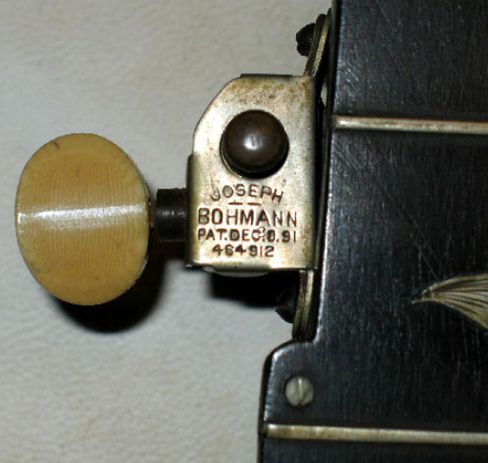
For steel strings I think the side-mounted guitar style tuner is a pretty good option, though. It was good enough for Bohmann in 1891...
Jonnycake White - Posted - 06/28/2019: 07:36:31
I took this banjo to a jam the other day and I got favorable comments on its volume and projection. It was nice to be able to hear myself play, and even the most seasoned jammercommented that he could hear me, which was a good thing. FWIW, there was a mandolin, electric bass, five or six guitarists, a fiddle, and two other banjos, both master clones, there. I wish I knew for sure where the power comes from. Larry Hill @helix1 would say it's from the rim.
Edited by - Jonnycake White on 06/28/2019 07:38:26
Helix1 - Posted - 06/28/2019: 14:23:40
I’m all right with that .
This is a great thread, I learned a lot
I think it isn’t just the rim, but totality of the rig, nice work
What wood is the rim/ neck?
I enjoy your final touches, then you take this gorgeous piece to the jam, form and function
I’m im sure it will last a century
Edited by - Helix1 on 06/28/2019 14:27:10
Jonnycake White - Posted - 07/02/2019: 07:07:47
Larry - see my first post for the woods I used - the majority is sissoo rosewood which I got from a friend in Gilbert AZ. He harvested it from somewhere around there.
Helix1 - Posted - 07/03/2019: 05:58:05
The wooden flange is really trick. the Jatoba rim cap is the first I've heard of.
Then it appears you have the only Rosewood Helix type rim. A family heirloom.
Notice the diversity of responders, we all like this rig, Jon.
Terms of Use | Privacy Policy | Privacy Consent (EU/GDPR Only)
Copyright 2026 Banjo Hangout. All Rights Reserved.