DVD-quality lessons (including tabs/sheet music) available for immediate viewing on any device.
Take your playing to the next level with the help of a local or online banjo teacher.
Weekly newsletter includes free lessons, favorite member content, banjo news and more.
Premier Sponsors





|
Please note this is an archived topic, so it is locked and unable to be replied to. You may, however, start a new topic and refer to this topic with a link: http://www.banjohangout.org/archive/406839
Page: 1 2
The Eclectic Banjo - Posted - 01/11/2026: 16:25:06
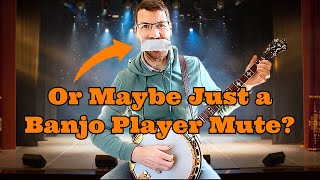
No formal music or voice training as you'll deduce by my accompanying video. I don't claim to be on key. I don't claim to be good. But I am starting to enjoy singing during my songs at my local jam. It's actually 2 different jams in the same building. One side passes around a mic, which I kind of like since I can actually hear the vocals, and one side does not (perhaps more of a traditional approach...) As my video indicates, playing with a banjo mute while singing really helps my voice come through. But what to do in a room full of jammers? Sure there's probably some common sense element that dictates one should play softer while someone's trying to sing, but that doesn't always come through to players. I feel like I have to shout the lyrics for it to matter.
Tips and tricks appreciated.
chuckv97 - Posted - 01/11/2026: 16:46:19
I just lay my fingers across the strings to mute them when I sing,, & I’ll move them up or down the neck at chord changes. As for too many people at jams playing loud during vocals, either yell “PIPE DOWN!!” or the jam host should explain before the jam starts to play very quietly during others’ vocals or solo breaks.
pinenut - Posted - 01/11/2026: 16:56:10
It appears that you are singing from the throat or mouth.
Sing from your gut; engage the diaphragm and stand-up too.
Edited by - pinenut on 01/11/2026 17:00:43
writerrad - Posted - 01/11/2026: 16:56:39
This is the problem with jams. You get many people for whom a jam is the only venue they get to play with other people. They have no concept that the music is played cooperatively to provide either a basis for dancing, singing, or entertainment in general and the musicians are supposed to WORK TOGETHER for that goal.
People who are not involved in real bands do not learn how to correctly accompany someone else. If you take lessons, you are largely learning to play the lead or solos. Many people who have not been in working or performing bands think they are in their bedroom or music room where they play.
When people jam, very often, no one discusses what each instrument or vocalist will do whatsoever, though a working and performing band will discuss that all out.
Jams often foster tactics especially by the inexperienced that would get even an able player kicked out of competent bands in either old time but especially Bluegrass.
One of the best examples people can find is watching the Flatt and Scruggs Martha White TV programs about 10 of which are still on YouTube. Go there and watch how great masters of the instrument like Earl Himself in his GLORY. Lester, Paul Warren, get out of the way sonically for either singers or when another musician is taking a solo. They are not trying to amp it up to get their moment of glory.
pinenut - Posted - 01/11/2026: 17:09:08
quote:
Originally posted by writerradMusic is played cooperatively to provide either a basis for dancing, singing, or entertainment in general and the musicians are supposed to WORK TOGETHER for that goal.
Preach it Tony!
This should be the first and last statement in every music book.
Edited by - pinenut on 01/11/2026 17:09:52
Owen - Posted - 01/11/2026: 17:33:26
Circle or performance jams [maybe what some call open mic? or coffee house?] are what's done locally, although "playing along with" is certainly encouraged; kinda even expected (?). Both jams have mics/amps .... but I just have 'em use one for my voice .... I, and my lovely and talented assistant whom I occasionally consult with, figure my un-muted banjos are loud enuff on their own. I guess I trust the person on the sound board (?) to make it sound tolerable.
I'm just glad that none of the participants [or audiences, so far as I know] publicly gets their panties in a twist over whatever more-or-less unprofessional stuff might transpire, and don't tell us lesser-lights to pipe down.
C'est la vie! 
Edited by - Owen on 01/11/2026 17:36:44
Mark Douglas - Posted - 01/11/2026: 17:52:58
Hey Dan,
I really like your vocals.
It's unique, authentic and comin' from the heart!
Don't change a thing.
You're awesome!
Mark Douglas - Posted - 01/11/2026: 18:01:55
I appreciate your singing Dan.
Some of the best vocals I've heard at jams are from folks who never took a lesson in their life and disregarded every silly piece of advice that came their way.
Keep letting it rip!
Mark Douglas - Posted - 01/11/2026: 18:07:02
quote:
Originally posted by pinenutIt appears that you are singing from the throat or mouth.
Sing from your gut; engage the diaphragm and stand-up too.
Are you a music teacher or maybe a vocalist? It might help him to know what area of expertise you are coming from. Otherwise he might think you're just a guy throwing stuff at the wall...
I'm sure you must have some unique experience to give such specific advice to a guy you've never met or heard in person.
Thanks.
TScottHilton - Posted - 01/11/2026: 18:32:56
Pinenut's advice is the ticket. In order to sing louder without straining or damaging your vocal chords, you have to "push" from your diaphragm and not your throat. This requires that you take in a deep breath before you start singing, and to fill your entire torso with that breath. Most people when breathing normally take fairly shallow breaths that only fill up the top of the lungs (this is the type of breath that makes your shoulders rise and fall). What you need is to take in enough breath to fill your entire lungs. The physical sensation of that will be in your belly. Like you just at too much food and it's pushing out from behind your belly button or a little higher. Then use your diaphragm to help push and support the breath for your voice. This will help you to sing louder and without as much potential for strain and damage.
I'm am by no means a vocal coach. So definitely check out some online courses from qualified professionals. But over the years I have learned from several who all give similar advice.
The last thing to keep in mind is to make sure you are not straining or pushing in any way so as to make yourself sore. That is the warning sign that you are pushing too hard, and doing that over time will lead to vocal injuries.
Edited by - TScottHilton on 01/11/2026 18:39:55
Bronx banjo - Posted - 01/11/2026: 18:43:41
Jams have their limitations. If you’re in a typical circle jam and there are 15 or so participants, even if they play quietly the sum total of the sound of their instruments can still drown out your singing. You can’t expect a large jam to have the same dynamics as a band of three or four people. It might be a good idea to get together with a small group of musicians so you can hear yourself sing and each member can work on dynamics cooperatively. You can still attend the jam but you won’t have to expect from it what it can’t provide. Jams, by their very nature, tend to be loud and unwieldy. Enjoy them for what they are.
writerrad - Posted - 01/11/2026: 19:00:16
At the Suwanee banjo camp the years I have been going (havent gone the last few years due to health issues) they have what is known as a band scramble. Groups of 4 or 5 participants get paired off into a band, headed by one or two instructors and work out a tune or song to perform in one of the evening concerts.
What used to surprise me, but no longer does, is that often whether it is a bluegrass group (a couple years they were short on guitarists for the bluegrass portion of the camp and I always bring a guitar so I would join as a guitsrist) or especially an old time group, most of the banjoists who join will admit that THEY HAVE NEVER EVER PLAYED IN A BAND. I just dont mean a professional or performing band, but any situation where 4 or 5 people have gotten together and worked out how to play a tune together to play.
Such a huge percentage of the Bluegrass and old time population only know jams with large groups of people, absolutely NO discussion of how a tune will be played, or what roles different instruments will take. This is not helped by the fact that most banjo lessons offered on any level are lessons on how to play a lead version of a fiddle tune, and almost no instruction is offered about how to play with others, especially the interaction between the fiddle and the banjo, or what to do with a vocalist.
In informal old time music and jams, vocals that used to be at the center of old time music back in the days of yore are unknown. Songs that used to be a standard part of old time seem weird, or that there are words to even central tunes like Cripple Creek or Fly Around seem news to people.
A surprising number of guitarists receive only instruction on how to do lead playing on fiddle tunes and such. There have been several times in our old time jam where I have had to put down my banjos and pick up my Martin because there might be 2 or 3 guitarists but no one is really playing rhythm.
That so many jams are out there, is a good thing compared to nothing. However, they should be adjusted to relate to how one would actually play in a cooperative performing band.
Edited by - writerrad on 01/11/2026 19:06:45
writerrad - Posted - 01/11/2026: 19:21:21
The other thing is that Bluegrass was developed and created by musicians using MICROPHONES on radio stations, and in professional performances. Watch the Martha White shows and try to figure out where the microphone is and watch the professionals weave in and out around it on the stage. The person taking the vocals is moving to the microphone and moving where his vocal is going to be the main thing going into the PA.
The tone and pitching of contemporary banjos clashes with that of the human voice. You cannot expect even the strongest voices to have to battle it out with a modern resonator banjo. If you cannot control it all with the microphone and PA system, then you have to play the banjo more softly during vocals.
This is the reason relatively few Bluegrass banjoists are 5 string banjo players. Del McCourey who to me is one of the greatest singers of any kind I have heard live and in person, started out as a bluegrass banjo player, but shifted to being primarily a guitarist as his role as a singer became more prominent. The guitar's bass support for singing is one reason the guitar which was once less popular than the banjo, won out in most forms of popular music that emerged across the lasts century.
You have to work much harder to make room for the voice on the banjo than on a guitar. Try to fashion your banjo playing so it provides more support for your singing. You should NOT be playing the same thing while you are singing that you are playing when you are either backing another musician or taking a solo.
Yet another thing that can help is the key. In serious grownup professional bluegrass, Monroe etc, you put pitch a performance based on the key that a vocalist can best sing it in, rather than the absolute that might pertain to a fiddle tune which is going to be set in one key for everyone.
Different singers are best in different keys. Find out what keys your voice works best in. Pitch tunes you wish to sing in those keys. When I participated in our local Bluegrass jam here in Palm Beach Co we were gifted with a number of folks who had been playing in local Southern Bluegrass bands for decades as well as snow birds down for retirement or the winter from the North or Canada or even Europe. Most standard Bluegrass vocal tunes you would expect the singer to tell folks what key she or he wanted to sing it in, and in time you would know.
That is the way most professional music works. If you have an ear for it listen to a big band jazz unit, or Bob Wills Texas Playboys Western Swing. Songs will be played in different keys depending on the singer, or the instrumental part of a tune will start in the standard key for a song, and then there will be a modulation to the key the singer will sings her or his vocal in.
The instrumental music should be fashioned to support the voice and every voice is particular. If you are going to sing find the keys you want. It is quite interesting to take Bill Monroes Bluegrass band recordings over the years, and see the different keys that different singers sang the same song. Monroe himself, who went through a lot of singers, would often raise the pitch of a tune when a new singer was hired to show off that the new singer could sing better would raise the pitch of a tune. Tunes that might have started out being played in G wound up being played in B flat!!!
Edited by - writerrad on 01/11/2026 19:36:35
Owen - Posted - 01/11/2026: 19:21:51
quote:
Originally posted by Mark Douglas
<snip> Some of the best vocals I've heard at jams are from folks who never took a lesson in their life and disregarded every silly piece of advice that came their way. <snip>
I can appreciate that ^^ . [Though I suppose mucho depends on what one's objectives are.... and, fwiw, I think Dan stated his clearly.]
Unfortunately we can't unhear some of the advice we're given and some of the people, who I assume think they're being helpful, should put their advice where their grannies can't see it. In my case, this summer I was told, among a couple of other things, that I should get my vocal range tested [I did] ostensibly with the objective of "expanding my range." I should have asked [but didn't]: Why the hello should I expand my vocal range?
[Thank goodness for coulda/woulda/shoulda.  ]
]
Edited by - Owen on 01/11/2026 19:32:54
Mark Douglas - Posted - 01/11/2026: 19:41:09
quote:
Originally posted by Owenquote:
Originally posted by Mark Douglas
Some of the best vocals I've heard at jams are from folks who never took a lesson in their life and disregarded every silly piece of advice that came their way. I can appreciate that ^^ . [Though I suppose mucho depends on what one's objectives are.... and, fwiw, I think Dan stated his clearly.]
Unfortunately we can't unhear some of the advice we're given and some of the people, who I assume think they're being helpful, should put their advice where their grannies can't see it. In my case, this summer I was told, among a couple of other things, that I should get my vocal range tested [I did] ostensibly with the objective of "expanding my range." I should have asked [but didn't]: Why the hello should I expand my vocal range?
[Thank goodness for coulda/woulda/shoulda.
You made several excellent points!
Unfortunately, many beautiful voices have been silenced by critics who thought that what they were hearing ....."Was not up to contemporary professional standards."
I certainly hope the OP will keep on singing and just ignore the so called experts and all the talk about diaphragm and gut and breathing and standing......blah, blah blah!
writerrad - Posted - 01/11/2026: 19:44:26
All that said, with those limits, it is the responsibility of the musicians playing accompaniment to SUPPORT THE SINGER by not playing louder than the singer. If a vocal is being taken then it is the job of everyone playing an instrument to not drown out the singer, but to support the singer.
All of this has to do with the way the contemporary "jam" culture in both old time and bluegrass is often at odds with the cooperative and arranged way actual old time music and actual bluegrass is played by bands,
Mark Douglas - Posted - 01/11/2026: 20:37:23
quote:
Originally posted by TScottHiltonPinenut's advice is the ticket.
It sure is.
The ticket to confusion, frustration and derangement!
The Pinenut seems to be an expert on everything here on the forum. His advice should be taken with many grains of salt!
Edited by - Mark Douglas on 01/11/2026 20:44:17
HarleyQ - Posted - 01/11/2026: 21:03:16
For Marks sake: I've been singing with my daughters in Church for 40+ yrs, no pro/exp for sure! You need to change the key!!.....it's hard to sing in a strain, or for me anyway.
Laurence Diehl - Posted - 01/11/2026: 21:36:57
As others have said, the problem is not that you don't sing loud enough. The problem is that the jammers are playing too loud.
Listening to each other is a key skill for any group. I wish it happened more often.
Mickhammer - Posted - 01/11/2026: 23:43:50
No offense, but some people aren't meant to be singers. Especially if you're not willing to work at it. The voice is an instrument, just like any other. Just because you can open your mouth and speak doesn't mean you can sing. Anyone can grab a violin, say, and slap at the strings and get sound out of it. That doesn't make it music. If you really want to play it -- and get others to stop and listen to you -- then you need to work at it. Put in the hours. Sure, some people are born with a good voice, and an ear. But most of us have had to work at it.
So, you want the others in your jam to respect your singing enough to tone it down a bit? Show THEM some respect - Get to work. Learn how to play your instrument. Do it in private. Record yourself singing. Figure out where you're going wrong. Think about getting a teacher.
Mickhammer - Posted - 01/11/2026: 23:52:19
quote:I should have asked [but didn't]: Why the hello should I expand my vocal range?
So that you can hit the notes?
Look, they were being polite. It's nice to be polite. But if you're serious about learning an instrument, it's necessary to accept constructive criticism.
All those people who've "never taken a lesson in their life" are lying to you : we've spent most of our lives singing, listening to ourselves, learning our instrument, figuring out how our particular voice works, figuring out how to make it work with the music we're hearing, figuring out how to work with our limits, how to extend them, etc. Sure, some people are just naturally gifted with a great voice. But even they have to work at it. The rest of us are at least born with the basics - a close-enough voice, a musical ear, a sense of rhythm, a sense of phrasing -- but most of that needs to be honed.
stanleytone - Posted - 01/12/2026: 02:09:35
Someone told me long ago to sing as naturally as possible. Youll never win a volume contest with a bunch of instruments. Besides that its bad for your vocal chords. If they tell you to sing louder you tell them to play quieter. (unless you barely sing above a whisper) . The singer has the spotlight when its his turn.
Texasbanjo - Posted - 01/12/2026: 04:21:20
I was once told that if you can talk, you can sing. That got me started. I had no idea about voice range or projecting my voice and at first I wasn't very good. After taking some singing lessons, I did learn how to figure out what key was best in what song for my voice. Many people think they can sing all songs in just one key and for most of us, that doesn't work. I also learned to project my voice (projecting is not yelling it's singing using the diaphragam to enhance).
If you're not happy with your singing, maybe a few voice lessons would help IF you can find a good teacher and IF you can afford them.
Ira Gitlin - Posted - 01/12/2026: 05:02:13
Is there someone in the jam(s) you go to who's supposed to be running the show, so to speak? If so, talk to them privately and see if they can make some kind of announcement/suggestion along the lines of, "Hey, everybody, if someone's singing, PLEASE keep your volume down so we can hear them!" You may not feel you have the authority to make that request, but maybe someone else does.
cottontop - Posted - 01/12/2026: 06:31:40
I always wished I could sing like Del McCoury, but my voice just won't go that high.
Joe
Texasbanjo - Posted - 01/12/2026: 08:05:25
I just listened to your video and there's nothing wrong with your voice. You do, however, seem to be struggling to get the high notes. Try taking the key to the song down a peg or two; i.e., if you're singing in G, take it down to E or D and see if it isn't easier to hit those high notes without straining your voice. You should also be able to project (sing louder) if you don't have to strain to get the notes.
Owen - Posted - 01/12/2026: 08:09:18
quote:
Originally posted by Mickhammerquote:
I should have asked [but didn't]: Why the hello should I expand my vocal range?
So that you can hit the notes?
Look, they were being polite. It's nice to be polite. But if you're serious about learning an instrument, it's necessary to accept constructive criticism.
All those people who've "never taken a lesson in their life" are lying to you : we've spent most of our lives singing, listening to ourselves, learning our instrument, figuring out how our particular voice works, figuring out how to make it work with the music we're hearing, figuring out how to work with our limits, how to extend them, etc. Sure, some people are just naturally gifted with a great voice. But even they have to work at it. The rest of us are at least born with the basics - a close-enough voice, a musical ear, a sense of rhythm, a sense of phrasing -- but most of that needs to be honed.
Not to hijack the thread, but I think it was so that I'd be able to sing in keys other than my natural (?) one. Look, I was there, and I don't think the lady was being inordinately polite or non-polite.... and as it turns out it wasn't constructive criticism .... it created much doubt [which incidentally, is still somewhat problematic, though I'm working on it] , so in this instance it was counterproductive.
For almost all my adult life the only singing I did was O Canada [at sporting events] plus what occurred in K/JK classes that my wife and I taught for a couple of years. It wasn't unusual to have music "on" in the background, so something might have been gained via osmosis, but I wasn't doing the things you mention ^^. My objective was/is to be able to sing well enough so that audiences weren't/aren't "turned off," and I was doing noticeably better before the constructive criticism.
Sometimes one-size-fits-all, doesn't! And, fwiw, I'm not lying [unless you know me better than I know myself].
I'm not "singing the blues," or looking for referrals to advance my music (?) .... just giving my honest (?) c'est la vie assessment.
And now the standard BHO disclaimer: YMMV [Though I also like Tom's proviso: I ask no agreement. ]
Edited by - Owen on 01/12/2026 08:10:52
Laurence Diehl - Posted - 01/12/2026: 08:25:30
quote:
Originally posted by stanleytoneSomeone told me long ago to sing as naturally as possible. Youll never win a volume contest with a bunch of instruments. Besides that its bad for your vocal chords. If they tell you to sing louder you tell them to play quieter. (unless you barely sing above a whisper) . The singer has the spotlight when its his turn.
Exactly. It's not a question of whether you're a "good enough singer ". It's a jam. People come in at different levels. If the jammers are not listening to each other, the instruments will get louder as your vocals get louder.
Owen - Posted - 01/12/2026: 08:30:18
This one [by Ola Belle Reed]? bing.com/search?FORM=ARPSEC&am...%20lyrics
I think I'm gonna hafta pull a switcheroo on: "Do you know ____________?" "Dunno ... hum a few bars." 
Edit: PIPING DOWN [in these threads] is one of the things I'm "working on" [i.e. referring to my drivel a few posts ^^.] When I sing (?) at home, my lovely and talented assistant regularly tells me I should sing louder; however I find it difficult, particularly when the songs are "mush" or have words [lyrics??] that don't make much sense [to me]. [More c'est la vie.]
Edited by - Owen on 01/12/2026 08:50:18
Mickhammer - Posted - 01/12/2026: 08:48:07
Not to hijack the thread, but I think it was so that I'd be able to sing in keys other than my natural (?) one.
I have a naturally deep voice that has long made it difficult to sing "the hits" - most popular (rock) singers tend to be more in the tenor range. Interestingly enough, in the last few years -- partly because I'm singing with a banjo now - I've had to reach higher than I was naturally comfortable (I don't like tuning down on the banjo, because I don't like floppy strings). It's helped me discover new areas of my voice that weren't previously available to me.
FWIW, I took a singing lesson with my wife's vocal teacher (she sings lyric opera stuff) a few years back. By the end of the lesson, I had already resolved not to keep seeing this guy -- his method would only have ruined my voice.
stanleytone - Posted - 01/12/2026: 09:31:58
Its hard trying to sing beyond ones range. I would think a voice coach might help you a little . Some just have a natural ability to go high or low. Just find the keys you're comfortable with .if theres a song that has one small part where you have to go beyond your range you might try just modifying the melody enough to get by. No use throwing away a good song because you cant hit a certain note
Owen - Posted - 01/12/2026: 09:39:07
I expect I'm putting my ignorance on full display, but can't the music [of that ^^ good song] simply be transposed into the key [no "s"] that I'm comfortable with?
Laurence Diehl - Posted - 01/12/2026: 09:50:03
quote:
Originally posted by chuckv97I repeat , “PIPE DOWN!”
That voice of authority is what we need Chuck, and sometimes a flogging might be necessary for the recalcitrants. I'm coming to your jam!
jdeluke137 - Posted - 01/12/2026: 10:25:23
Lots of good advice, especially about finding the right key.
My son was leader of a successful local band. He was the primary singer. I had never considered him a good singer, and he’s not particularly good. But his band played and he sang with what I dubbed “reckless abandon”! They were very popular locally and made some fairly good money doing it until “band drama” happened as it can and they broke up.
But I learned from his experience that when at a jam if I sang with reckless abandon it would energize the song, I would be heard, and the players in the jam would feed off that energy. I’m not a good singer, but I have a good time and when I sing everybody seems to have fun.
So my advice - find the right key and then sing with “reckless abandon”!
Mickhammer - Posted - 01/12/2026: 11:58:36
One man's reckless abandon is another man's cat-impaled-on-an-iron fence, I suppose.
Caveat: I've never been to one of these jams. I did one or two jams with rock musicians, not a fun experience for a singer!
banjered - Posted - 01/12/2026: 13:03:12
Singers and instrumentalists are often at odds. Instrumentalists are like race horses, hyper-wound up to jump out of the gate. I and others have weighed on this topic of "singing with the banjo." Go to the "Q" to the left of this page and search. And yes I sing "High on the Mountain" in either the key of D or E, both standard G tuning lowered down with Aquila Minstrel strings, and in this instance in modal tuning. If you really want to get "the stink eye," try a song at a (race horse) Irish jam. Ha! Banjered
chuckv97 - Posted - 01/12/2026: 13:39:43
^^^^^ at our Thursday soiree jahms at the Irish Cultural Centre us gloobrassers play upstairs and the Irish sessions are held downstairs in the, what else, pub. Quite often one or two of those jigmeisters will venture up and peek around the corner with ears wide open to catch the melodious strains of our jam chaos.
p.s. for Hi on a Mtn I start low so I can hit (somewhat) the high notes later into the song,, but it's a screecher for me....
Edited by - chuckv97 on 01/12/2026 13:41:47
Texasbanjo - Posted - 01/12/2026: 14:05:18
i sing High on a Mountain in the key of G. I have no problem with high or low notes. I tried singing it in A, but that tended to strain the vocal chords reaching that high note, so back to G it was.
writerrad - Posted - 01/12/2026: 14:20:10
that is pretty much how everything is done in popular music, the voice is more limited in keys that most instruments. Go through a Monroe or Flatt and Scruggs record especially from the 50s and check the keys that tunes with vocals are in, find how different they are than what you may think the generic key for it.
The Eclectic Banjo - Posted - 01/12/2026: 14:27:43
quote:
Originally posted by Mark Douglasquote:
Originally posted by Owenquote:
Originally posted by Mark Douglas
Some of the best vocals I've heard at jams are from folks who never took a lesson in their life and disregarded every silly piece of advice that came their way. I can appreciate that ^^ . [Though I suppose mucho depends on what one's objectives are.... and, fwiw, I think Dan stated his clearly.]
Unfortunately we can't unhear some of the advice we're given and some of the people, who I assume think they're being helpful, should put their advice where their grannies can't see it. In my case, this summer I was told, among a couple of other things, that I should get my vocal range tested [I did] ostensibly with the objective of "expanding my range." I should have asked [but didn't]: Why the hello should I expand my vocal range?
[Thank goodness for coulda/woulda/shoulda.
You made several excellent points!
Unfortunately, many beautiful voices have been silenced by critics who thought that what they were hearing ....."Was not up to contemporary professional standards."
I certainly hope the OP will keep on singing and just ignore the so called experts and all the talk about diaphragm and gut and breathing and standing......blah, blah blah!
I'm actually intrigued by the diaphragm advice because in hindsight I've seen it in action, and when paired with someone who is actually good at singing, WOW it makes a difference.
For my own efforts, I will continue exploring my vocals. The more I practice at it, the more I'm able to inflect one part of a song or another, giving it more character than robotic type singing. I'm enjoying the journey.
Owen - Posted - 01/12/2026: 14:34:35
quote:
Originally posted by chuckv97Sing like nobody’s listening?
That's all well-and-good, but people can't be trusted*. 
After our last jam (?) , my wife told me that it sounded like I "...didn't really have my heart in it" for my first song [.... but apparently the rest were okay].
* to NOT listen.
writerrad - Posted - 01/12/2026: 14:36:43
quote: He has worked at it since childhood like you have worked at teaching people. He even gave up being a banjo player to play the guitar in performances because it fit into singing.
In music we try to make it should like it comes natural and some people have it and others do not. Singing is just like playing the banjo, or writing a poem, it takes working at it, struggling with it, finding people who can do it to tell you how they got there.
It is work to learn singing, just like it is work to learn playing the banjo. Take the process you have used to learn anything else you do well and repeat the steps. Mostly, get help. Find someone you know who can sing even if it is not with a banjo, find out what they know and do it.
writerrad - Posted - 01/12/2026: 14:38:23
quote:No sing like reaching and touching the listener is important to you!
Originally posted by chuckv97Sing like nobody’s listening?
Mickhammer - Posted - 01/12/2026: 15:05:21
I'm actually intrigued by the diaphragm advice because in hindsight I've seen it in action, and when paired with someone who is actually good at singing, WOW it makes a difference.
The way I look at it, when you're singing, your entire body becomes the instrument.
Every zone plays its part. But the main part is the long tube from your gut (well, you can get down all the way to the perineum) to your mouth - you're like a combination saxophone and bagpipe. You've got keys and bellows all along the chain. You're compressing and expanding the various bits in order to push the air past your vocals cords and into your mouth (and nose and head) in various ways to produce the notes and timbres that you're looking for.
Similar to playing any other instrument, it takes practice getting the various parts to work together, and in rhythm (of course there's the added complexity of phrasing).
Of course, you can also just sing, which is what I did for many years - partly because I was playing punk, rock, etc. and I had to really push to get myself heard over the band. For the last few years, I've been making mellower music and working with professional musicians who know how to listen - so I've been able to hear myself better and make a lot of progress. I've been singing for nearly 50 years and I've never sung better.
The Eclectic Banjo - Posted - 01/12/2026: 16:33:30
quote:
Originally posted by MickhammerI'm actually intrigued by the diaphragm advice because in hindsight I've seen it in action, and when paired with someone who is actually good at singing, WOW it makes a difference.
The way I look at it, when you're singing, your entire body becomes the instrument.
Every zone plays its part.
I'm going to milk my big toes for every ounce of music they got! :)
Nopix - Posted - 01/12/2026: 16:36:03
Jever try singing softly just to see if the dorks will quiet up a little?
Just move your lips and don't sing just to mess with them.
I wouldn't attend a jam with a "leader." Sandbox rules are what a real jam is all about. I told one bunch, if you don't want me harmonizing the refrain you better say so, cuz I can't hardly help it.
Edited by - Nopix on 01/12/2026 16:39:18
The Eclectic Banjo - Posted - 01/12/2026: 16:40:02
quote:
Originally posted by writerradThe tone and pitching of contemporary banjos clashes with that of the human voice. You cannot expect even the strongest voices to have to battle it out with a modern resonator banjo.
This is the reason relatively few Bluegrass banjoists are 5 string banjo players.You have to work much harder to make room for the voice on the banjo than on a guitar. Try to fashion your banjo playing so it provides more support for your singing.
You should NOT be playing the same thing while you are singing that you are playing when you are either backing another musician or taking a solo.
Different singers are best in different keys. Find out what keys your voice works best in.
A lot of great comments all around on your posts, thank you!
RE: not playing the same thing for different parts of a song - I may experiment with a banjo mute for awhile on my songs with vocal parts. I've been trying to play near the bridge for a more mellow tone too, doing a basic chopping rhythm during vocals, and trying to do more of a basic rolling for backup, so hopefully I'm working towards meeting your aforementioned criteria.
RE: Key - It seems like my range is suited to the banjo in standard tuning. Low D to high G. Can you explain more what you mean by how the banjo clashes with the human voice though?
Questions:
1) Can you expand more on the tone and pitching of banjos clashing with the human voice? This seems evident with my play though without the mute on, but curious about the why's.
2) I'm confused by what "This is the reason relatively few Bluegrass banjoists are 5 string banjo players." means. Did you mean vocalists?
Page: 1 2
Terms of Use | Privacy Policy | Privacy Consent (EU/GDPR Only)
Copyright 2026 Banjo Hangout. All Rights Reserved.