 | stanger says:
10/11/2018 3:43:56 PM
Hi, Tom...
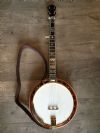
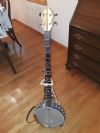
The 6500 model was the top of the Ode/Baldwin line. 6500 is the number used in Baldwin's main catalog for the banjo, but it's not commonly known to players by that number.
To players, it's the famous D model, the model that put both Ode and Baldwin on the map.
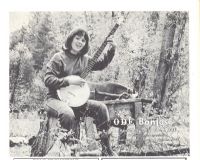
The Ode company was founded 6 years before Baldwin bought it as part of the piano company's huge expansion into other musical areas outside of pianos in the 1960s.
By the time of the buyout in 1966, Ode was already a well-known maker of the then-popular longnecked folk banjos, but Ode never made a direct competitor to the Gibson Mastertone bluegrass banjos until the company began building wood-rimmed banjos for the first time in 1965.
The company had only made aluminum-rimmed banjos until then, and while they sold very well, they didn't have the classic bluegrass tone of a Gibson.
The wood-rimmed line all had letters as designations, with the model A being the simplest of the line. The D model wasn't the fanciest of all, but it was very close to it, and it was as fancy when ordered as an F model, with the optional gold plating and engraving, as anything Gibson made.
And in the era, were better built than the Gibsons. Most importantly, they had great bluegrass sound. And because they were sold directly to customers, cost less than a Gibson RB800.
It didn't take long before some of the major players in Nashville took notice of the D. One of the best studio banjoists ever, Bobby Thompson, adopted the D and used it only afterwards, and Thompson ruled in the studios; he was the most recorded banjoist of all time as a session man, and was enormously influential among the pro bluegrass players.
The code on the label, if the label says "Baldwin" on it is actually very simple and logical, but the code was developed after a few years. The code before then was a confusing numbering system with small numbers stamped on the inside of the wood rim.
So, to date your banjo, I would need to have the serial number. But the thing about the date the banjo was made is not as important to Ode players as it is with other makers, because Baldwin never changed anything much on the D except for some cosmetics.
From the first to the last production, the quality level remained high. And many things never changed at all.
But there were changes that make the earliest Baldwins more desireable, as for 2 years, they were all made in the Ode factory in Boulder, Colorado. These banjos all bring in more return than the others, and can only be identified by just a few things.
Originally, the D was made of rosewood. The D had plain nickel-plated parts. The model E, more expensive, had engraving and nickel plating, and the model F had gold plating and engraving as the top of the line.
When Baldwin bought the company, it consolidated features and eliminated many models out of the Ode line. During this time, the D's rosewood was dropped and replaced with walnut, and nickel was replaced with gold plating.
The D was also given some engraving, where it was most easily seen; on the armrest and tailpiece. The rest of the parts were left un-engraved, but the F model was engraved on all the metal parts.
But the engraving came along a year after the gold plating was substituted on the D. For a year, all the parts were plain, un-engraved, but gold plated.
Bobby owned one of those banjos, so naturally, they're the most sought-after by players.
But Ode collectors try to find the rosewood banjos, which are incredibly rare now.
There's one small inlay change on the fingerboard of the D that can make a lot of difference in the value of the banjo.
It's the marker most folks look for that designates when and where the banjo was made. While it makes little rational sense, it does make a lot of difference in the price. That little inlay means more than the wood or anything else to Ode collectors and fanciers.
The Ode/Baldwin's construction is almost completely different from it's competitors of the time. No Gibson parts except for a few will fit onto one, and the last banjos ever made were built in 1980.
This makes all Ode/Baldwins vintage now.
Fair value? The only way to determine that is to compare your banjo to other brands of similar age and condition, and compare that to the prices the Odes have consistently brought.
Condition is very important, as no new replacement parts are now available, unlike Gibson, Fender, Stelling, and other brands that survived.
The Ode is one of those brands that tends to either make devotees or not at all. So determining a fair value will require you to do some more homework.
The archives here are a treasure trove of info, but they will take you some time to sift through. There's also an inactive Yahoo group of member-only Ode fanciers that's also a great source of info, but you'll have to join it to see any of it.
Hope this helps. You have a very good banjo to sell, and this is a very good place to offer it. Be sure to take many good pictures if you put it up for sale here.
regards,
stanger
(who owns many Odes. My first was purchased in 1964.)
|