




Banjo Hangout Logo
Banjo Hangout Logo

Premier Sponsors


Ode Banjos

Join This Group

For those who love, own & play Ode Banjos

180 Members, Created 2/6/2011 -

Administrators: kwfolk1 (owner)


< Back to Home

1960s Ode Resonator Banjo

From vintagetenor on 1/28/2014 10:23:46 AM

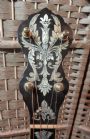
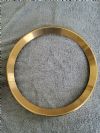
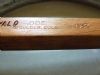
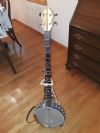
Hi All,  I have a 1960s Ode resonator banjo that I'd like to sell, but in all my research I haven't found any other Ode that resembles this one.  So I have no idea of value.  Perhaps some here can help me. I posted some photos of it in my album. I'm currently disassembling it for cleaning.  There is a name designation is the "Tonemaster" inlay at the 22nd fret.  And there seems to be a faint "D" BEFORE the word "Model" inside the rim.  The tuners look as if they have been changed and there were D-tuners there at one time as well (holes plugged up). The condition is near excellent.  I have the D-tuners - they are gold plated like the arm rest. Thanks for your help!  Mike  tel # (814) 623-2187

2 Comments

stanger says:
1/29/2014 11:27:50 AM

Hi, Mike…
You have an early Style 2 SR Baldwin. This banjo was Baldwin's entry-level instrument, but would be considered to be a mid-line model compared to the other makers of the day.
The aluminum rim was from Ode's earlier banjos; the company used only aluminum rims until 1965 when they introduced their first wood-rimmed models. The rims were cast in the mold that has the raised lettering on the tone ring 'shelf', and after Baldwin bought Ode, Baldwin never altered the mold, even though the banjo works moved from Colorado to Arkansas. The aluminum Ode banjos made in Colorado had many tone ring variations, but the brass cap resting on top of the casting was designed by Ode's founder, Chuck Ogsbury, after his company was purchased and is only found on Baldwins.

The banjo is early; later ones all had Baldwin's patented geared truss rod in the neck. The rod was adjusted with a tool that fit in a hole drilled in the heel cap. The gearbox is inside the heel. These first appeared ca. 1968, but Baldwin bought Ode in late 1996. For a year and a half or so, Baldwin continued to use the Colo. factory, then moved the works, but continued to use Colorado parts until they were all used up in production. My best guess as to the age of your banjo is ca. 1967.

Your banjo originally was quite plain, with a Baldwin metal ribbon epoxied on the peghead face and dots on the fretboard. As often happens with unadorned banjos, it looks to me that a previous owner decided to gussy this banjo up with a home done inlay job. The inlays are amateurish in design, and are all abalone. Abalone was never used on any Ode or Baldwin factory inlays. The original dots remain in the board.
The Tonemaster block inlay may have come from a company who produced pre-cut inlays, or may have been engraved by a local jeweler. The Tonemaster term was never used by Ode or Baldwin.

Ode sold all of the parts they made openly. Anyone could buy an armrest, tailpiece or whatever without needing to purchase a finished banjo. Your gold plated parts all look like standard Ode make, and may have been purchased by the same owner who did the inlay work.
The armrest's engraving indicates it's early; the engraving pattern later changed drastically, so this fits in with my suppositions. The guy could have ordered the parts just after he bought the banjo, then did the inlay work afterwards.

The banjo most likely came with the Ode cam style D-tuners. These were an original Ode product, and worked better than all the other cam tuners, so were a popular option. The plugs look pretty crude, and the tuners probably interfered with the peghead inlays, so were removed.

When it comes to banjos like yours, beauty is in the eye of the beholder. The Ode market is different from Gibsons- Ode buyers prefer all-original instruments as a general rule, because Ode was the rare banjo company that made all the parts and never bought many from outside suppliers. All the metal parts are typically Ode manufacture.

It looks to me that the back of the resonator has been re-finished; the color and sheen is different from the side walls. This is common on the brand these days. Back in the 70's, players were less careful about scratching their resonators with belt buckles than they are now.
regards,
stanger

vintagetenor says:
1/29/2014 1:36:30 PM

Thanks for the info! Makes sense about the folk art inlays. I should have caught that. I just learned a bunch.

I'm sure the added inlays devalues it somewhat, but it'll still be a good player.

I'll clean it and set it up and price it right. Thanks!!


Post a Comment

You must be logged in and a member of this group to post a comment.

Linked Content

Click for Details

Gibson Mastertone RB-800 1980
Linked by june-apple 11 months ago: I have double name Baldwin ode model D!

Click for Details

.38 Special Banjo Tone Ring
Linked by june-apple 1 year ago: I like their crispy sound!

Click for Details

Jerusalem Ridge on Banjo–Fast & Slow
Linked by alwaysintune 3 years ago

Click for Details

For Sale 1962 ODE Model 23, Longneck 5-String Banjo
Linked by 35planar 6 years ago

Forum Post: (untitled)
Linked by jun3machina 6 years ago

Click for Details

Ode model 21 long neck w/hsc
Linked by john bange 7 years ago

Forum Post: (untitled)
Linked by 35planar 7 years ago: Looking for an ODE 5-string neck, pre-Baldwin, dowel stick or no dowel stick, long or standard, tuners or none as long as the truss rod, frets, and wood are decent with no twist. I know, seems futile.

Forum Post: (untitled)
Linked by 35planar 7 years ago

Tablature: Bach prelude to cello suite #1 in G major
Linked by zeemie 8 years ago

Forum Post: (untitled)
Linked by john bange 8 years ago

Page: 1  2  3  4  Last

Terms of Use | Privacy Policy | Privacy Consent (EU/GDPR Only)

Copyright 2026 Banjo Hangout. All Rights Reserved.


Hangout Network Help

View All Topics  |  View Categories

9.765625E-02