





Can anyone recommend videos on using a table router to route down banjo freeboards. I am thinking of obtaining one to do this rather than hand sanding.

Do you have a drill press ?
If yes, then chuck up say a 1/2" dia good drill bit......then with a very good precision machinists square you would true up the table in perpendicular.....
then, insert a good quality sanding drum and check the 'runout' (ie., deviation from true roundness)....then, by using similar fretboard material density, make a 'thicknessing pass' to determine if you get a 'wave pattern' or a nice smooth surface like a baby's bum.
Much depends on your set-up variables and prep work, touch of the hand, etc. - but essentially this type of tooling configuration is a sideways mini-thickness sander concept.

I've seen a lot of folks planing with a hand held router. You basically fasten your board to the bench and mount the router to a sled that straddles the board and slide the sled back and forth. Lower the bit and repeat.
There should be a lot of videos on youtube, just search for planing with a router.
I think it would be more difficult to do on a router table, at least for me.
Edited by - RBuddy on 05/28/2026 10:24:38
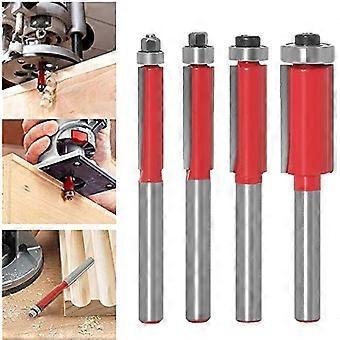
I might not have the problem straight in my mind but would a bit like this help?
Edited by - Owen on 05/28/2026 11:11:01
I agree with Rbuddy
Invest in the handheld router base
Clamp the neck in place
I clamp the Dremel upside down in the vise and use a Mahog plate with a spinning tool sticking through to cut pearl and hardwood inlays.
It’s easier and safer to push the smaller pieces against the tool that way (learned it on the hangout).
quote:
Originally posted by OwenI might not have the problem straight in my mind but would a bit like this help?
What are these called??
quote:
Originally posted by HelixI agree with Rbuddy
Invest in the handheld router base
Clamp the neck in place
I clamp the Dremel upside down in the vise and use a Mahog plate with a spinning tool sticking through to cut pearl and hardwood inlays.
It’s easier and safer to push the smaller pieces against the tool that way (learned it on the hangout).
That is a "Mahog plate"?
quote:
Originally posted by banjonzquote:
Originally posted by OwenI might not have the problem straight in my mind but would a bit like this help?
What are these called??
They're "flush trim router bits."
[My confusion is with your use of the word "match" in the title. Are you matching the width of the fretboard to the width of the neck? Those ^^ bits might work for that, but I don't see them useful if it's the fret board thickness you're reducing by planing/sanding .... but caveat emptor, I'm a putterer more so than a "real" woodworker.]
quote:
Originally posted by Owenquote:
Originally posted by banjonzquote:
Originally posted by OwenI might not have the problem straight in my mind but would a bit like this help?
What are these called??
They're "flush trim router bits."
[My confusion is with your use of the word "match" in the title. Are you matching the width of the fretboard to the width of the neck? Those ^^ bits might work for that, but I don't see them useful if it's the fret board thickness you're reducing by planing/sanding .... but caveat emptor, I'm a putterer more so than a "real" woodworker.]
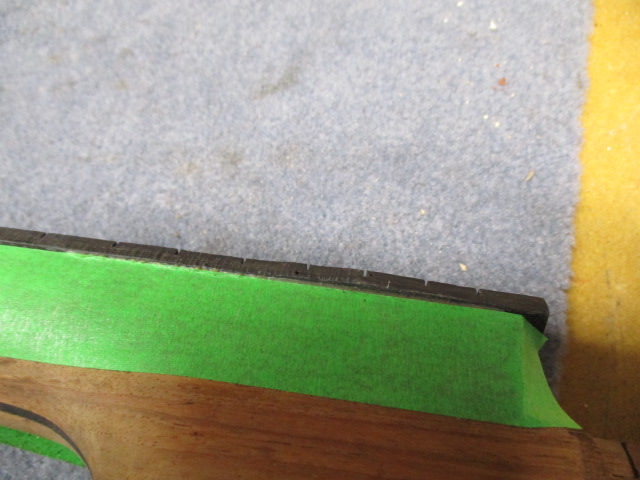
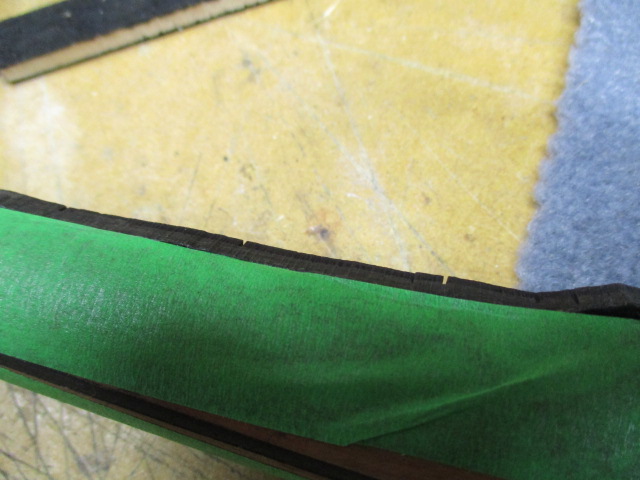
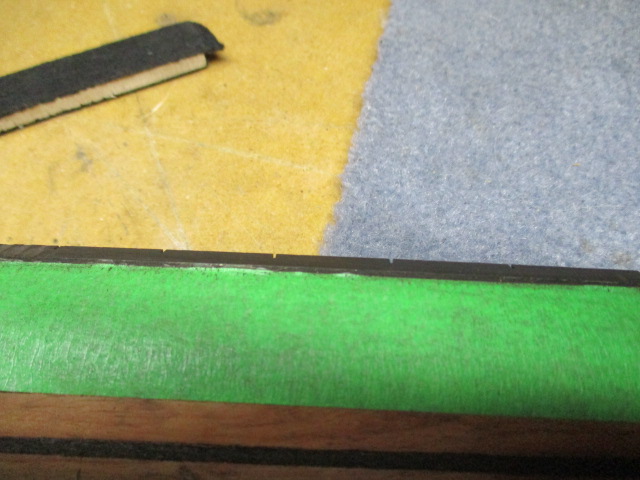
I am matching the width of the neck. After I inlayed the fretboard, I marked it out for fitting to the neck. It is glued in place and slotted. I have trimmed it down closer to the shape of the neck using my bandsaw. I am currently using sanding blocks (long and short ones) to sand down the edges but it is very slow work, hence the enquiry.
I use a small, very sharp block plane and a chisel plane for the tight spots, get close, then finish up with sandpaper (but I'm usually sizing the neck to the fingerboard instead).
How about sending a photo of your project so far. Then we'll know better what you need to do.
quote:
Originally posted by pfolmarHow about sending a photo of your project so far. Then we'll know better what you need to do.
Prior to this I clamped the neck to my workbench raising if up using offset (behind the fretboard) woos packer and using my sanding blocks (long and short) to sand off the excess fingerboard. I have taped off the neck to protect it. I am currently investigating an inexpensive router and routing table to see if this will work.
Terms of Use | Privacy Policy | Privacy Consent (EU/GDPR Only)
Copyright 2026 Banjo Hangout. All Rights Reserved.


