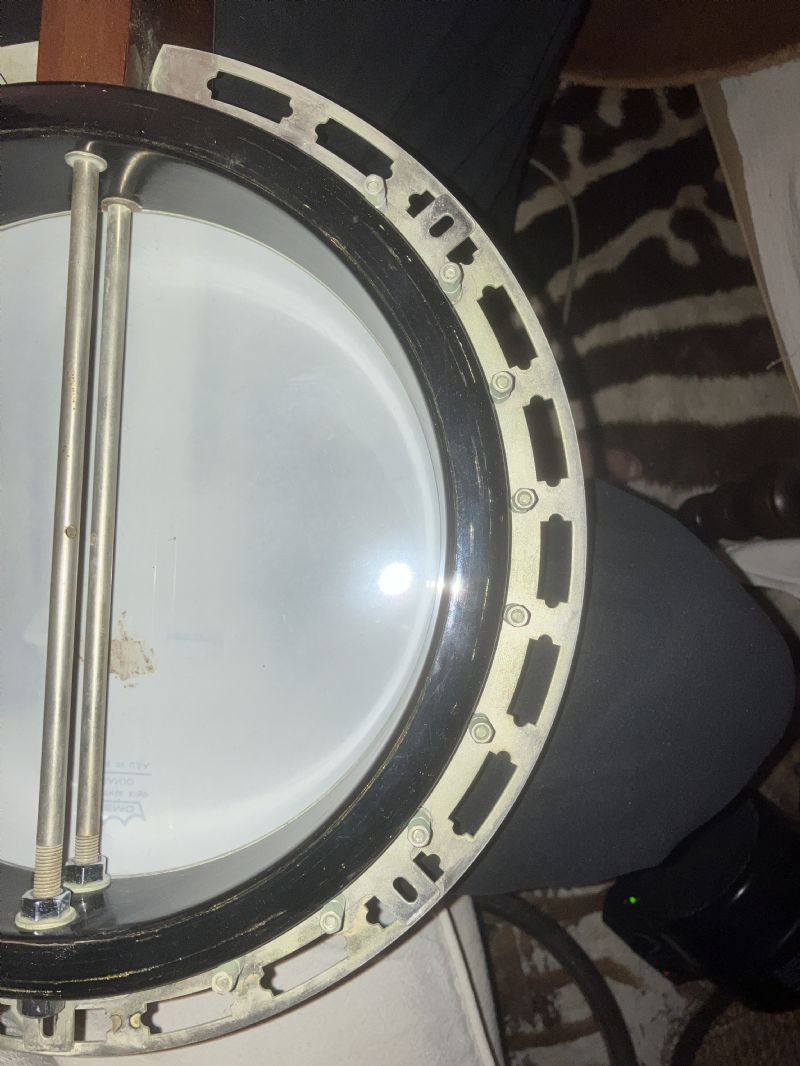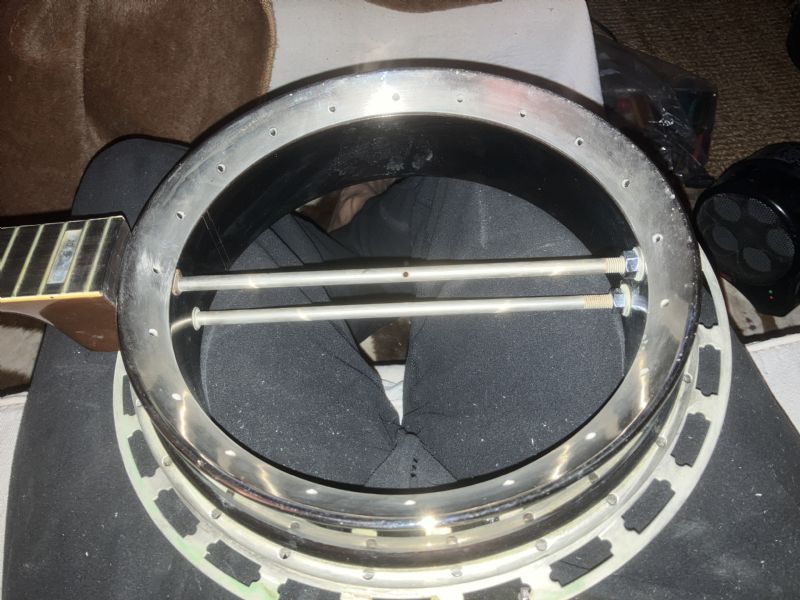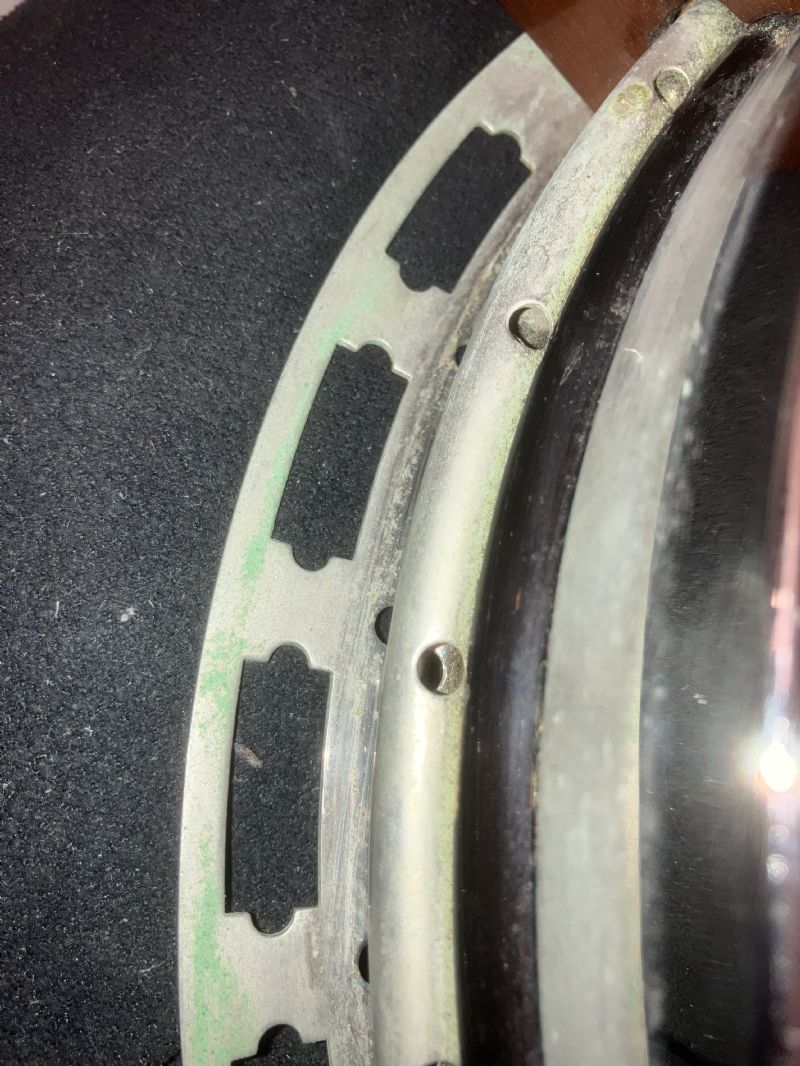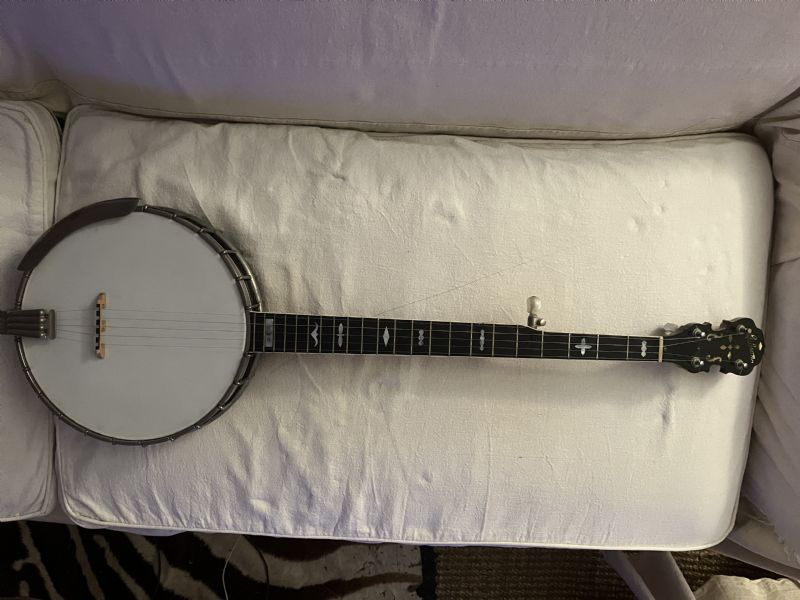





I have a 1970's Gibson Mastertone that is mildly corroded, musty and need a new head but mostly fine.
1) How can I clean off off the green corrosion and mold without making things worse. And once clean, should I wipe with some sort of oil/wax etc???
2) I'd like to unbolt the neck to get at all the tone ring parts but looks kinda sensitive--I am good with my hands so as long as it's not a black art I'd like to pull the neck off.
3) Also, it is a 70's banjo, crappiest of the mastertones, can I improve the sound while I have it apart?
4) Lastly, where do you get banjo parts these days? Need a drum head, strings, and any parts/supplies you fine folks suggest. Either mail order or in New York City.
thanks for any help.

You need to post some close detailed pictures of the banjo with the resonator off with a good close up of the rim and pot assembly. Not all of the 70s banjos were bad. You need to determine what exactly you have before you start changing things up that might not need changing at all. Nothing wrong with removing the neck and there are probably YouTube videos out there that you can view to tell you how to get that done. I would start off with some mild soap and water first to see exactly how clean you can get it with the pretty basic cleaning agents. If more is needed, go to one of the banjo merchandise suppliers on line and see what they have and go with that. (Banjo Ben, Bob Smakula, Elderly, Banjoteacher.com and others comes to mind.) Same for any wood cleaning item if you want to work on that area as well. Just get the pictures up and there will be plenty of knowledgeable folks willing to help you out after they see what exactly it is that you have. I do see where you put three photos on your page but some of the neck and peghead would help as well. Also if there is a serial number post that. Should be on the back of the peghead if I remember correctly.
Bobby
Edited by - BobbyE on 06/27/2026 12:16:35

Thanks so much BobbyE, I initially posted with pictures but it failed so I'll try an put them here.
Serial number is 101617.
Edited by - banjopickingfool on 06/27/2026 12:20:29
More pix:
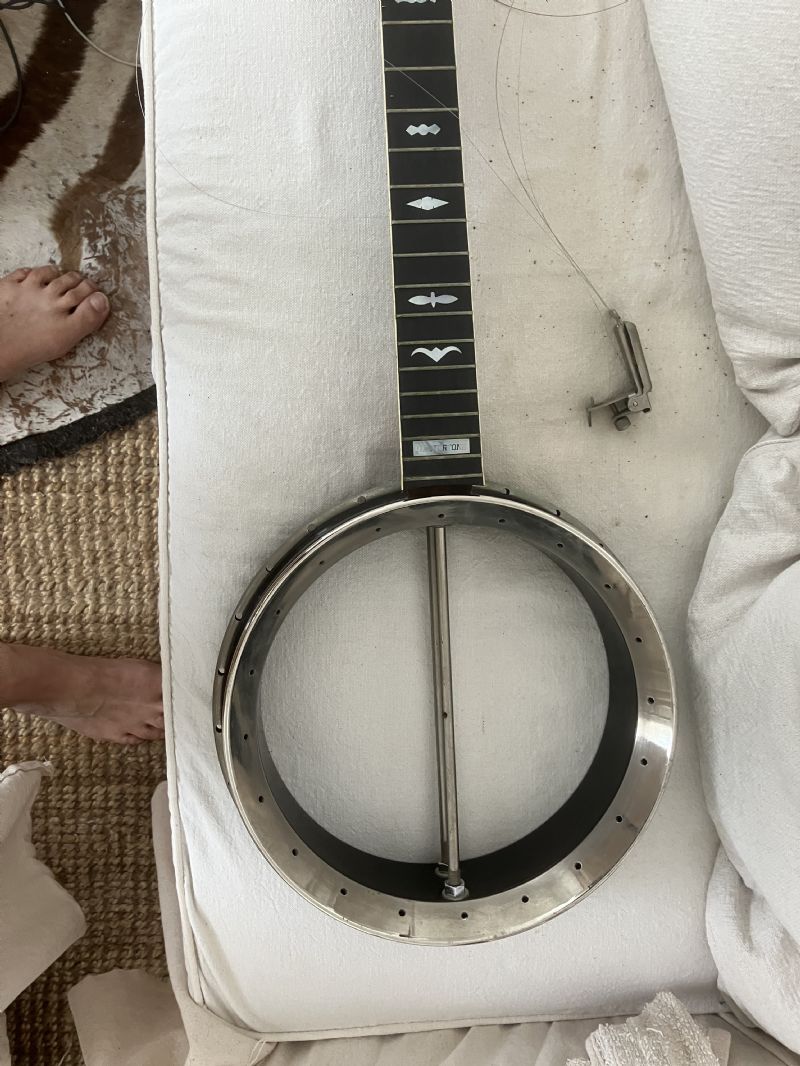
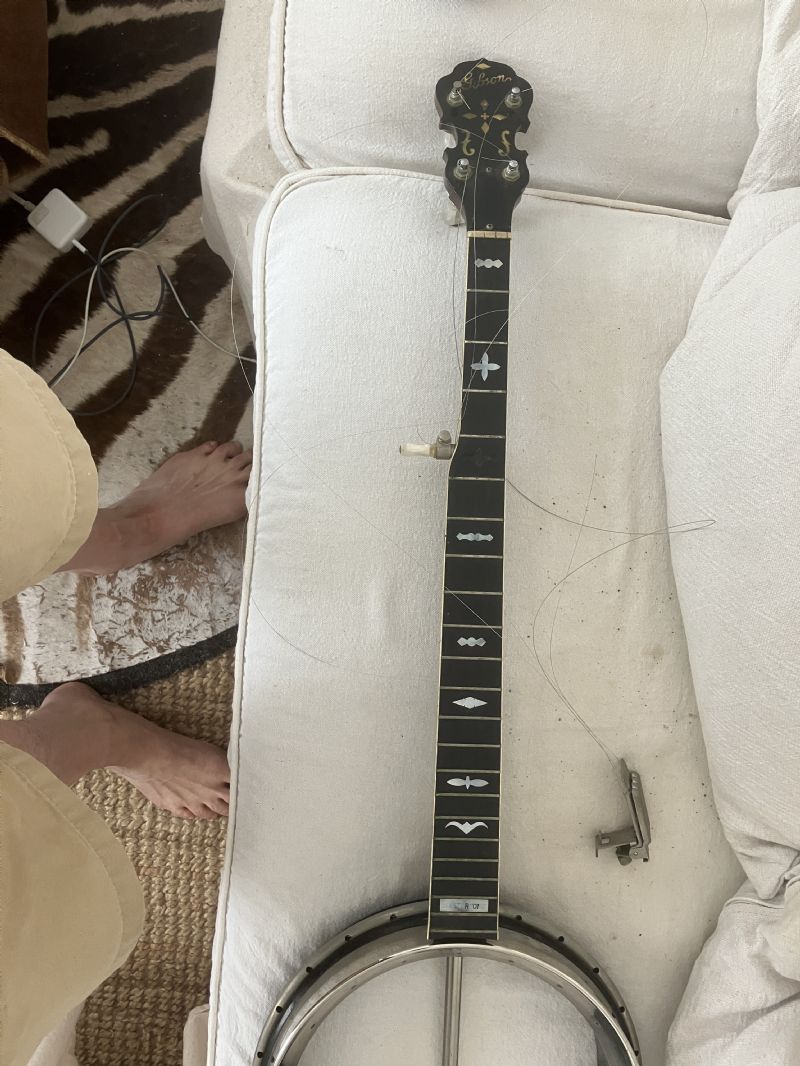
You might want to weigh the tone ring while you have it apart. Some of them were quite "light". Others considerably heavier.
Is the 5th fret inlay missing?
I used simichrome and an old t shirt to clean up my 1926 recently (see recent thread in here for pics). Came out great.
Not too many places left in NYC to buy banjo accessories. Guitar Center and Retrofret (in Carroll Gardens, Brooklyn) should have banjo heads. Guitar Center has only two different sets of banjo strings in the store. One of its NY stores had only one set.
You can get a head and D'Addario strings online from Smakula Fretted Instruments. Bob's a member here. Larger selections of strings are available at Elderly.com and StringsandBeyond.com.
The easiest big improvement in sound will be getting a new bridge. I, and many others, like Scorpion bridges. Made by Silvio Ferretti in Italy. But available here in the US from Banjo Ben's Warehouse, BannjoTeacher.com, and maybe also Elderly. Dotson bridges and the various models made by Kat Eyz are also popular and good sounding.
Tailpiece is next. I'm partial to the Kershner style. But I have a parts banjo with lots of 70s RB-250 parts and it sounds pretty good with the original Gibson clamshell tailpiece. I put some sticky-back velcro under the cover to keep it from rattling on the strings.
I second the suggestion of Simichrome polish for the metal. Use it once, you may never have to polish the parts again.
Definitely start mild with cleaners for the wood parts. Maybe use Gibson guitar polish -- the liquid in a pump bottle -- and a microfiber cloth.
If there's a musty smell in the banjo case, that's going to take a lot of work. Start by sprinkling lots of baking soda in it then leaving it outside, open, in the sun. For several days. Vaccuum it out. Then consider spraying the inside with a dilute solution of white vinegar and wiping the interior to be sure it gets everywhere. Then more baking soda to neutralize the vinegar, more sun, and more vaccuuming. Finally: I put some coffeemaker charcoal water filter packets in a musty case after doing all the above, and it's been odor free for a couple years now. I keep them in the case with the banjo. One sits on the flange when the banjo is in the case. It used to have a smell and now it doesn't any more.
For that missing inlay, contact Tim Davis - https://www.davisbanjosandinlay.com - to find out if he has that specific piece in the exact size as used in the 1970s RB-250. Richie Dotson - https://acousticbox.com - is someone else to try. He's authentically duplicated most or all the pre-war Gibson inlay sets. While the 1970s Gibson inlay copies one of the pre-war designs, I don't know if the pieces are the exact same size. Richie might know.
Even if the piece is a drop-in fit, it's probably going to need sanding to bring it down flush with the fretboard, and that's tough to do with the adjacent frets in place. Maybe your banjo could use a fret job. Or at least a partial.
Looks like that banjo has been stored in a humid area by the metal "fogging", but especially what looks like rust on the coordinator rod threads. That will make the nuts very hard to loosen and then tighten up again.
I suggest a VERY small, judicious drop of something like good old Liquid Wrench to penetrate those threads to make it possible to turn the nuts without too much frustration. I more than half expect you want to remove the neck to clean it, and clean the rim where it mates up. Take photos of those coordinator rods now, and label each and every rod, piece, nut and washer so you can get them back in exactly the same spot they came from.
I expect you'll be able clean everything with the suggestions you've received. Rub GENTLY! Even Simichrome, which is pretty gentle, can rub away PLATING (like the nickel plate on your banjo. Many folks get by with Windex and a soft cloth for that "fogging" or hazing look.
I second Gibson polish for the wood.
For STUBBORN case stink, buy a little spray bottle of Ozone cleansing spray at an auto parts store. Car dealers use this get stink out of used cars. Don't get it on the banjo!
For decades I got all my banjo parts from the Stewart MacDonald catalog in Ohio. They're on-line and still in business. Basic bridges are around $10 unlike the boutique bridges which are $25 to $60.
You can get a replica tailpiece very similar to what came from the factory. Now made in Asia. Not very expensive. Tailpieces are very much a matter of personal taste though.
Good luck and have fun.
Thanks everyone, put in an order for head/strings/bridge with Smakula and I tracked down a neck removal video by Richie Dotson so a lot of progress thanks to all you.
I'll keep it gentle and track down a replacement inlay or just make my own--probably a bad idea to not fill it right?
Need to start playing more than anything else.
Thanks again
Breck
In case you need more, here's a video of a player named Johnny Butten taking apart a banjo. I have it starting when he gets to the neck.
In other discussions, some Hangout members have said they like Flitz metal polish. I believe it's one of the least abrasive products available. Maybe even non-abrasive.
The issue with banjo parts is the nickel plating is sometimes thin. Some individual pieces are sometimes advertised as "triple nickel plated" which I guess is supposed to promise thicker plating. Best to proceed with caution.
Most of the photos I've seen of 1970s RB-250s (usually in for sale listings) show the metal having dulled after 40-50 years.
Thanks Old Hickory, The Old Timer, jt80, J.Albert , BobbyE , I got it cleaned up nice, still need an inlay but a huge improvement.
It all went so much better with your input, now I have to get playing it again.
Banjo Picking Fool
quote:
Originally posted by J.AlbertYou might want to weigh the tone ring while you have it apart. Some of them were quite "light". Others considerably heavier.
The tone ring is 800 grams, or 1.7 pounds/28 oz in freedom units. It was hollow on the inside.
quote:
Originally posted by banjopickingfoolquote:
Originally posted by J.AlbertYou might want to weigh the tone ring while you have it apart. Some of them were quite "light". Others considerably heavier.
3) Also, it is a 70's banjo, crappiest of the Mastertones, can I improve the sound while I have it apart?
The tone ring is 800 grams, or 1.7 pounds/28 oz in freedom units. It was hollow on the inside.
Improve the tone by replacing the lightweight tone ring with about three pounds of bronze.
Edited by - pinenut on 07/15/2026 20:25:01
quote:
Originally posted by banjopickingfool
The tone ring is 800 grams, or 1.7 pounds/28 oz in freedom units. It was hollow on the inside.
Wow.
I never knew the early light tone rings were that light! I had read in a discussion long ago that some were as light as 2 lbs. And I've repeated that ever since. This is a quarter pound less! But, yes, the scooped out underside has been described as the reason for the lighter weight. Less metal in the ring. I'm willing to believe the reason for that was cost-driven. Gibson was owned by Norlin in the '70s and it's well documented that corporate accountants were making decisions on product features that put costs and profits over craftsmanship.
As Kam says, a new tone ring is an upgrade to consider. But in my opinion, and especially since you have the banjo reassembled, I think you should wait a bit, play the banjo as-is, hear how it sounds, and discover the best sound you can get out of it. You may like it fine.
If not, new tone rings cost in the wide range of $270 (Sullivan SUL-1) to $875 (Huber HR-30). I don't know for a fact that the Huber is the most expensive. I'm just giving a range. Blemished B-stock Gold Tone rings and used RK no-hole or 20-hole tone rings go for less. The Sullivan basic 20-hole ring was used by Gibson in its JD Crowe banjos (90s and later) and sometimes in other models when the spec Kulesh ring was in short supply. So with a Sullivan or Kulesh ring, you'd be using the same thing as a Gisbon ring! Sometimes you can find a used Gibson ring with either the script Gibson logo stamp (Crowe ring) or Gibson USA emblem (which I guess makes it the Kulesh; I could be wrong). But you pay a premium for these marks on what are otherwise the same rings you can buy unmarked for less.
Tone rings aren't guaranteed to be drop-in replacements, so your rim might need work. But if yours is the original multi-ply rim, then replacing that with a new 3-ply rim is another improvement. It's quite possible that a new rim alone (even keeping the old tone ring) will improve the sound. Sullivan sells a rim turned and fitted for 2-piece flange and tone ring for $215.
Have fun.
The scale is not super accurate so could a bit different.
Thanks for the pointers on improving the ring/rim with detailed sources and prices--most helpful.
Are there things I can adjust that may help that are less than $100? Play-ability is probably the most important thing right now but someday sound will matter too.
I am aware of:
1) Bridge
2) Drum tension
3) Tail piece (have Gibson that I am guessing came with the banjo--the tension adjustment screw bit broke off--lame crappy 70's banjo bit.
4) String weight--have D'Addario EJ60 - Light Banjo Strings--thinking of moving to medium.
5) Drum (got a new plastic 11", Remo, Top Frosted)
6) Picks, Dunlop metal and Ernie Ball thumb and some others.
I have the resonator off for now, so the sound improvements may not be relevant, but it would be nice to know. Resonator needs new edging--it is pretty much shrapnel.
In your original post, you asked about wax for after you cleaned it up. I like "Renaissance Wax" like they use at the British Royal Museum. The small size lasts forever since it goes on thin.
Thanks, need to take care of the wood parts too......
I had some success with improving the tone on my korean made epiphone (multi-ply rim, flathead tone ring) by tuning the fit of the tone ring to the rim. The inside surface wasn't in full contact with the rim, so I deepened the cut on the outside on my router table. I didn't do that great of a job, because now there's a little gap on the outside that's visible, but I have full contact on that inside lip and it sounds better. Measure once, cut twice, as I always say! I think ideal is that no tension on the head, the inside lip touches fully, there's like a paper width gap on the outside skirt, and when the head is tensioned fully that outside gap disappears. Very difficult to achieve without a lathe, though.
This was suggested in the Siminoff banjo setup book. It has tons of "things you can do to improve the tone", many of which don't cost a lot. However, not all of them have worked out for me. The above, for instance won't do anything if you already have full contact on the inside lip of the tone ring.
quote:
Originally posted by banjopickingfoolAre there things I can adjust that may help that are less than $100?
Your list covers it. The original tailpiece rendered non-adjustable probably should be replaced. I like the Kershner style. There are several versions available. Prucha's is probably the most expensive-- and over $100 I think.
Terms of Use | Privacy Policy | Privacy Consent (EU/GDPR Only)
Copyright 2026 Banjo Hangout. All Rights Reserved.