





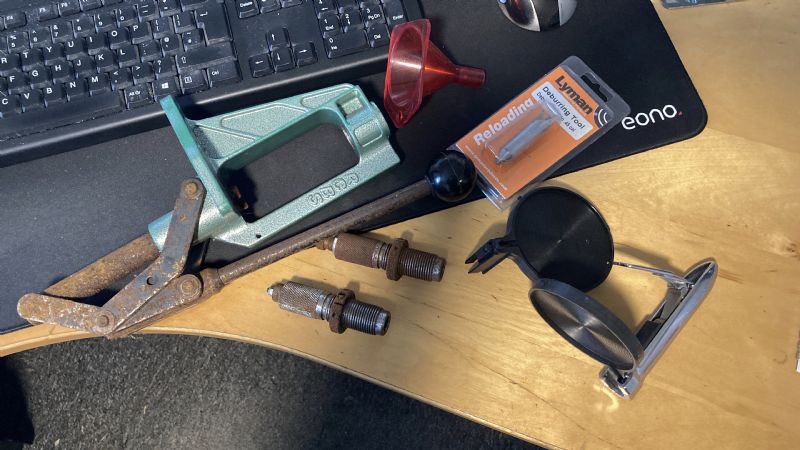
New rules in Scotland (where I hunt) mean that in order to legally put venison into the public food chain, it has to be shot with non toxic bullets. So, I thought I’d give reloading a try. Years ago I was given an old and rusty press and some .308 win (my deer rifle calibre) dies. I rooted them out of my garage and they were in a bit of a state so I thought I’d spend a few days cleaning them up to see if they could be made serviceable. I have to say I’m pretty pleased with the results.
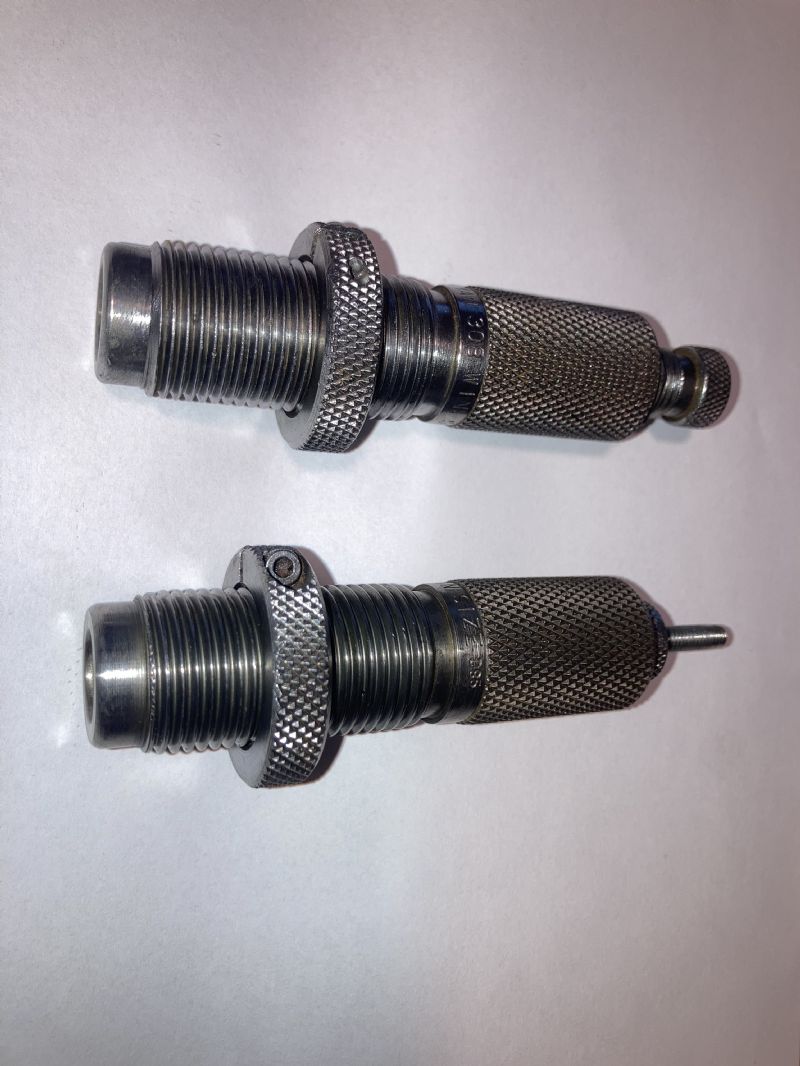
I went to buy some rust cleaner, and was surprised at the cost - approx $27 per litre. Half an hours research later and some citric acid on order from Amazon, I’d found an alternative cleaner, which when I tried it, was absolutely fantastic - it seriously worked really well. 1 litre water, 100g citric acid and 63g baking soda, which came to the princely sum of approx $1.27 - definitely worth a try. The dies in the pic below, came straight out of the cleaner, dried in the oven then a quick wipe with a plastic scouring pad.
Overall, I’m pleased with the makeover, I need some primer pins and a shell holder and I should be good to go. I’m meeting a buddy next week who is a reloading geek, he’s doing to work through a suitable load and show me the ropes.
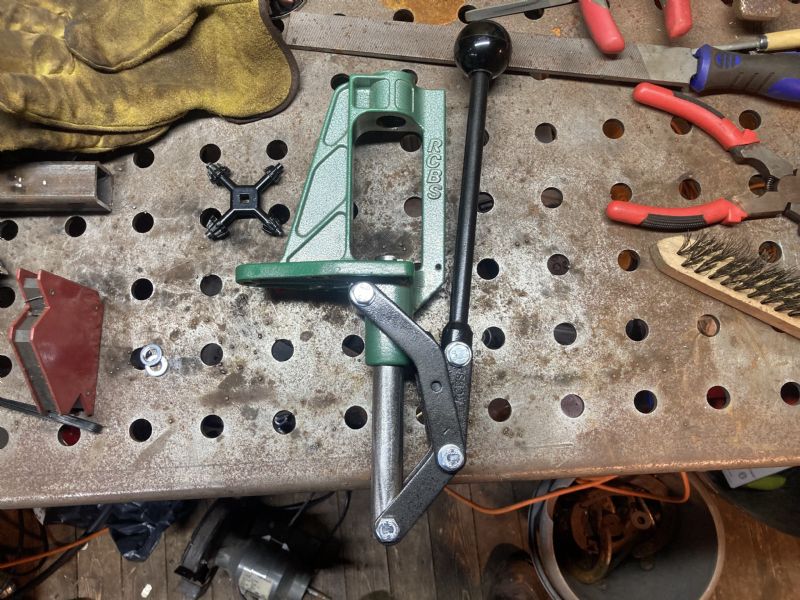

Good little press..
You can make pins..easy nuff..
Or just.. buy a set of Lee dies ..cheap nuff comes all set with shell holder n loading info..

Buy or get your self a set of calipers...for safetys sake...I like the dial type meself.
Keep the loads on the lite to mid range in powder n the brass should many reloadings....
if these are used brass be dang sure to check the length close. or you may already know this....
Easy nuff to trim them if needed..
quote:
Originally posted by 1935tb-11if these are used brass be dang sure to check the length close. or you may already know this....
Thanks Terry, my buddy is a reloading geek/ocd so I'm sure he'll put me straight. All my brass is once fired (by me) and from the same manufacturer so at least I know it's providence.
quote:
Originally posted by STUD figmo AlBuy or get your self a set of calipers...for safetys sake...I like the dial type meself.
Keep the loads on the lite to mid range in powder n the brass should many reloadings....
Thanks, I've got a few sets of calipers, in fact I was using a lovely little manual micrometer my daughter bought me when I was working on the dies. Everything coming from the states is in some messed up measurements and working out what they mean in good old logical metric takes some doing!!
My buddy has been working on some .308 non toxic loads for someone else, I'm hoping we can find a sweet spot for my rifle. Apparently you need to dial the velocity up a little with copper bullets, they don't deform the same way a lead bullet does so they need a little more speed in order to transfer the energy in anything over two hundred metres.
What about the newer bullets with the nylon tips. I don't know if they have lead or not
quote:
Originally posted by olyWhat about the newer bullets with the nylon tips. I don't know if they have lead or not
Oly I don't know what the laws are in your neck,of the woods, but we have to use expanding ammunition for deer - there's a minimum calibre/bullet weight/muzzle velocity for each of the 6 species of deer we have. Lead or copper, typically the bullet has some form of cavity or weakness built into it to permit the expansion/deformation which allows for,the massive energy transfer. They usually have a polymer tip to keep them aerodynamic and allow them to cycle from the magazine to the chamber.
Edited by - Wet Spaniel on 08/09/2026 19:21:49
Terms of Use | Privacy Policy | Privacy Consent (EU/GDPR Only)
Copyright 2026 Banjo Hangout. All Rights Reserved.

